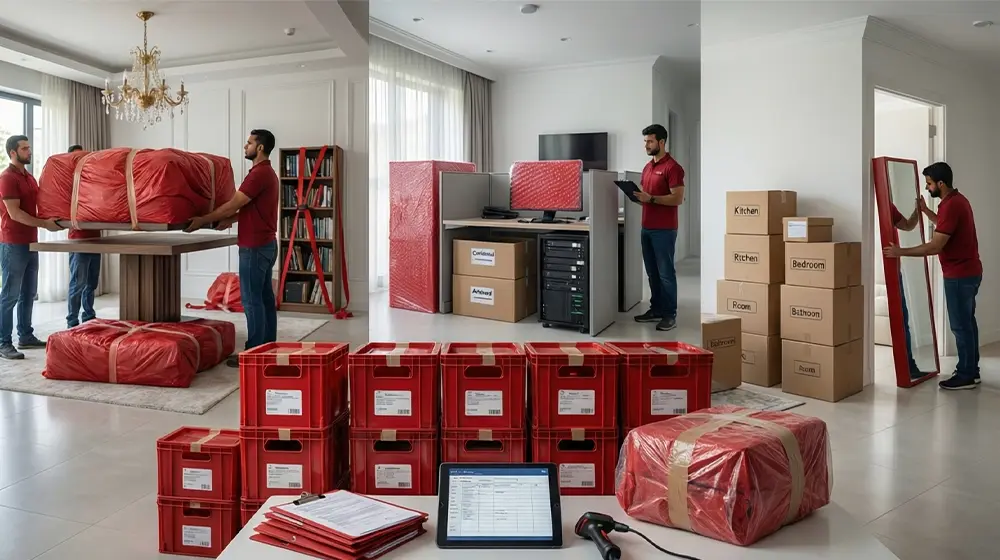
Shipping household goods from Dubai to the UK looks simple until the invoice arrives and “shipping” turns out to be only one line in a much larger bill. Sea freight can be cheaper but slower, while air freight can be fast but punishing on chargeable weight.
This guide turns your move into a procurement-grade decision, mapping total landed cost across Dubai origin services, freight, UK handling, customs, and Transfer of Residence paperwork, plus risk costs like storage and delays.
What benefits come from reading this guide?
- Quote comparison becomes auditable through a line item model that separates origin services, freight, UK charges, and risk costs.
- Mode selection becomes measurable through a decision matrix that links CBM, chargeable weight, transit windows, and compliance triggers to cost exposure.
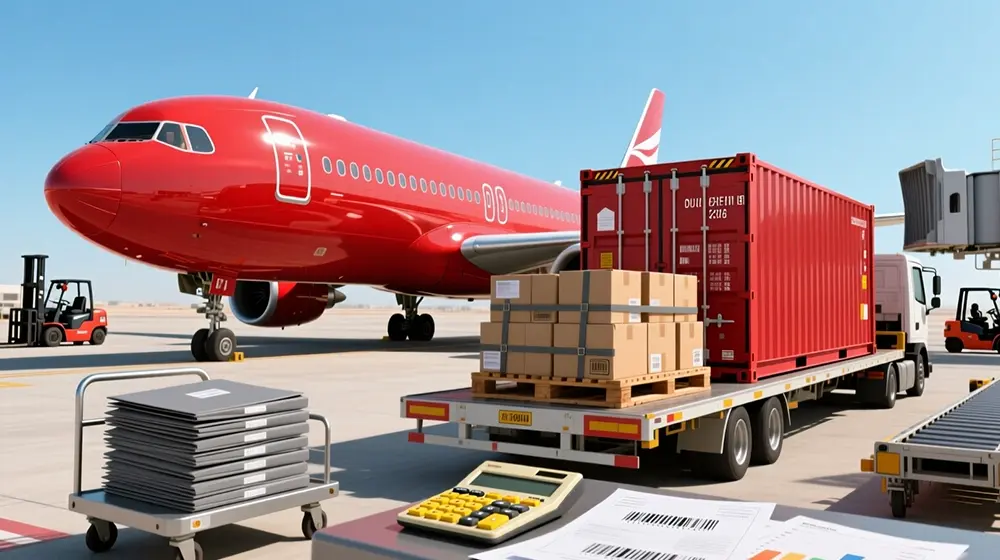
What does “cost to move from Dubai to the UK” mean in procurement terms?
The cost to move from Dubai to the UK equals the total landed cost across origin, freight, UK handling, and delivery, plus delay risk costs. A single line item named “shipping” rarely represents the total.
Total landed cost framework
| Cost block | What it covers | Pricing basis |
|---|---|---|
| Origin services in Dubai | survey, packing, materials, handling, export paperwork | labour hours, cartons, service tier |
| Main carriage freight | sea freight FCL or LCL, or air freight | CBM for sea, chargeable weight for air |
| UK destination charges | port or airport handling, deconsolidation, delivery planning | handling tariffs, access constraints |
| Customs and compliance | ToR paperwork, restricted item management, and inspections | documentation quality, item profile |
| Risk costs | storage, demurrage, detention, rebooking | time exposure plus tariff basis |
What single mistake inflates final invoices the fastest?
Scope gaps inflate invoices faster than index changes because time-based fees convert days into charges. Detention and demurrage are extra charges arising when containers remain beyond the agreed time.
What cost ranges appear in Dubai to UK estimates?
Estimates show sea freight totals in the low thousands of pounds for smaller home sizes and higher totals for larger volumes, while air freight estimates sit materially higher for household-sized consignments. These figures act as benchmarks, not quote substitutes.
Benchmark ranges from estimates
- 20 ft FCL from Dubai to the UK: AED 7,200 to AED 14,700 (estimate).
- LCL estimate for Dubai to UK container shipping: AED 3,600 to AED 9,200 (estimate).
- Dubai to London, 1-bedroom flat estimate:
- Sea: £3,972 to £4,390
- Air: £7,566 to £8,362
- Indicative air freight pricing from Dubai to the UK: AED 17 to AED 30 per kg for economy air freight in larger weight tiers, with separate express tiers (estimate).
What do these numbers include and exclude?
These ranges typically blend freight plus some service components, but they do not standardize packing, stairs, lift booking, storage, customs selection, or final mile constraints. That variance explains why the Dubai to UK price often diverges between the “headline price” and the “total landed cost.”
What is the core decision variable: CBM for sea freight or chargeable weight for air freight?
Sea freight tends to track cubic meters, while air freight tends to track chargeable weight. Your household goods profile determines which metric dominates.

CBM in Dubai to the UK shipping cost
CBM means cubic meter volume for the shipment footprint. It becomes the pricing basis for LCL and often the planning basis for FCL packing density.
Chargeable weight in Dubai to the UK air freight cost
Chargeable weight equals the higher of actual gross weight and volumetric weight. A widely used air cargo conversion treats 1 CBM as about 167 kg and uses a divisor of 6000 when dimensions are in centimeters.
Air volumetric formula (common standard): Volumetric weight (kg) = (L cm × W cm × H cm) ÷ 6000
How much does it cost to move from Dubai to the UK by sea freight vs air freight?
Consumer benchmarks show sea totals materially lower than air totals for apartment-scale moves, while mode availability shifts at larger household sizes. Use these as reference points, not as final quotes. Dubai to London estimates list:
- 1-bedroom flat: Sea £3,972 to £4,390, air £7,566 to £8,362
- 3-bedroom house: Sea £6,111 to £6,754
- 5-bedroom house: Sea £9,167 to £10,130
Dubai to the UK moving cost examples
| Home size proxy | Sea freight estimate | Air freight estimate |
|---|---|---|
| 1-bedroom flat in London | £3,972 to £4,390 | £7,566 to £8,362 |
| 3-bedroom house in London | £6,111 to £6,754 | Not listed |
| 5-bedroom house in London | £9,167 to £10,130 | Not listed |
How does sea freight pricing work for Dubai to the UK household goods?
Sea freight cost to move from Dubai to the UK comes from four blocks:
- Origin services
- Ocean freight
- Destination charges
- Last-mile delivery
Ocean freight appears visible, while access and handling often drive variance.
1) What container capacity figures matter for budgeting?
A 20 ft dry container holds about 33 m³ of volume under typical specifications, and this figure anchors FCL planning. Maersk’s equipment specification sheet lists a 20 ft standard dry container volume of 33 m³.
Use that 33 m³ reference as a planning ceiling, not a guaranteed usable volume. Packing density and item geometry reduce effective utilization.
2) What “FCL” vs “LCL” changes in cost behavior?
FCL prices are for a container, while LCL prices include shared space and handling.
- FCL: Fixed container line plus services, better for higher CBM and higher privacy requirements.
- LCL: Pay per CBM plus consolidation and deconsolidation handling.
Some LCL guidance shows AED per CBM ranges, such as AED 370 to AED 550 per CBM (market estimate).
3) What does the global container market say about baseline freight pressure?
Global container indices provide a reference for broad freight market conditions, even when they do not represent a Dubai to UK lane price. Drewry’s World Container Index reported $2,182 per 40 ft container on 18 Dec 2025, after an increase from earlier December levels. Index increases often correlate with tighter capacity and higher contract volatility, especially on Europe-linked lanes.
4) What transit time ranges appear in published route guides?
Sea freight timelines typically sit in the multi-week range on Dubai to UK routes. Some route guides cite 35 to 40 days for Jebel Ali to Southampton and Jebel Ali to Liverpool as indicative sea cargo transit time ranges.
A separate quotation style route estimate shows 48 days as an estimated transit time for Jebel Ali to Southampton in a sample quote context.
Use these as scheduling baselines. Port congestion, transshipment, and routing changes extend real delivery windows.
Sea freight cost components that drive the total landed cost
- Survey and CBM verification
- Packing tier and materials grade
- Export documentation and origin handling
- Container and ocean freight charges
- UK terminal handling and deconsolidation
- Delivery access costs, lifts, stairs, and parking control
How does air freight pricing work for Dubai to the UK household goods?
Air freight cost to move from Dubai to the UK scales with chargeable weight, security handling, and capacity conditions. It fits time-critical moves or partial shipments.
What formula sets the air freight billable weight?
Maersk states the formula as: Volumetric weight (kg) = (L × W × H) ÷ 6000, and it attributes 6000 to IATA standardisation.
This divisor implies 1 CBM ≈ 167 kg at the planning level.
Example: 2.0 CBM air shipment planning conversion
- Volumetric conversion: 2.0 × 167 = 334 kg (planning)
- Actual weight case A: 180 kg, actual weight, 334 kg chargeable weight
- Actual weight case B: 420 kg actual weight, 420 kg chargeable weight
What does the IATA market data indicate about air pricing conditions?
IATA market analysis reports rate movement rather than lane-specific household goods pricing. IATA reported September 2025 cargo demand up 2.9% year on year and freight rates down 5.5% year on year while rising 1.3% month on month, which indicates a market with softening annual yield but sequential tightening.
This matters because the Dubai to UK air freight cost often responds to capacity cycles, not only to distance.
What do capacity constraints mean for price volatility?
Air cargo relies on a smaller supply base and can face capacity crunch conditions. Industry reporting cites fleet aging and delivery delays for new freighters as drivers of multi-year capacity stress, with potential rate pressure during demand spikes.
Decision implication: air freight pricing for Dubai to the UK moves can swing rapidly in peak periods.
What UK customs and tax relief rules affect the total cost of moving from Dubai to the UK?
UK customs charges and relief eligibility often determine whether “freight cost” stays a minor share of the total Dubai to UK moving cost. The key decision: qualify for Transfer of Residence relief or pay import charges on parts of the shipment.
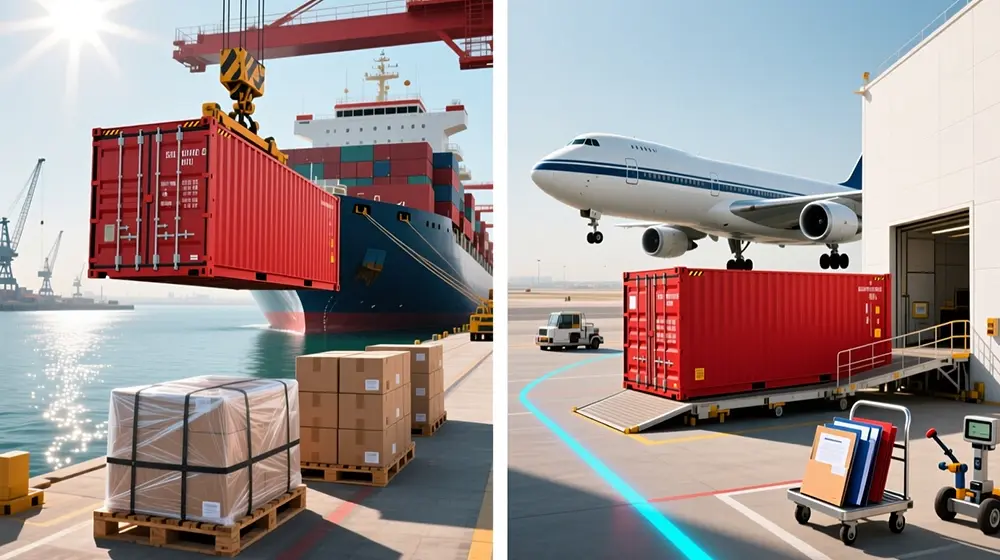
1) What does the Transfer of Residence relief cover?
Transfer of Residence relief provides relief from customs charges on personal belongings when transferring residence to Great Britain, subject to eligibility and application steps. Transfer of Residence relief can remove customs charges on eligible personal belongings, and the application process involves a ToR1 submission route. Incorrect paperwork often creates time and storage exposure.
2) What tdoes he UK government say about moving personal belongings?
Tax and customs duty can apply when moving personal belongings to the UK from abroad and directs movers to follow rules across categories like vehicles, food, animals, and excise items.
3) What documentation supports faster release behavior?
Pre-arrival information and consolidated declarations support faster clearance pathways in many customs models. WCO Immediate Release Guidelines operate on the principle of advance information provided to customs and accept consolidated declarations such as manifests, waybills, or inventories in applicable contexts.
Documentation set that supports a clean clearance pathway
- Inventory and packing list with clear item descriptors
- Proof of residence transfer documents aligned with ToR eligibility
- ToR1 application reference for customs clearance
- Transport document, such as a bill of lading for sea or an air waybill for air
Which compliance items trigger rework costs for Dubai-to-UK shipments?
Three compliance categories create outsized budget risk: wood packaging marks, container verified gross mass, and lithium battery declarations. Each category can cause holds, repacking, or re-documentation.
1) What does ISPM 15 affect in household goods moves?
ISPM 15 defines treatment and marking requirements for wood packaging material in international trade. The IPPC standard includes marking requirements and treatment system requirements.
Cost impact: Unmarked wood crates or pallets trigger quarantine escalation and rework.
2) What does SOLAS VGM affect in sea freight?
SOLAS requires verification of the gross mass of packed containers before vessel loading, and misdeclared mass links to safety incidents. IMO explains the VGM requirement and the SOLAS regulation linkage. VGM as cargo plus dunnage plus tare and requires VGM submission before vessel loading.
Cost impact: Late or incorrect VGM can trigger rolling, rebooking, and storage costs.
3) What lithium battery rules affect air freight?
Lithium batteries require compliance evidence, such as UN 38.3 testing and handling under dangerous goods rules. IATA’s lithium battery guidance states UN 38.3 testing as a requirement and references ICAO Technical Instructions and IATA DGR editions for the applicable period.
Cost impact: Undeclared power banks and spare batteries trigger shipment split or rejection in air mode.
What cost line items belong in a Dubai to UK moving quote comparison?
A comparable quote isolates the same cost buckets across modes, then compares totals under an identical scope.

Sea freight quote line items to request
- Origin services in Dubai: Survey, packing, export documentation.
- Origin handling: Liftvan or palletisation, terminal receiving.
- Ocean freight: LCL rate per CBM or FCL rate per container.
- Destination handling in the UK: Port handling, devanning for LCL, and delivery order fees.
- UK delivery: Final mile trucking, stair carry, parking constraints.
- Customs clearance: ToR1 processing workflow and inventory review.
Air freight quote line items to request
- Chargeable weight basis: Actual kg vs volumetric kg.
- Airline and terminal charges: Export and import handling.
- Dangerous goods screening: Batteries, aerosols, perfumes, and devices.
- UK delivery: Bonded release timing and delivery slot costs.
What do three practical case profiles show for the cost of moving from Dubai to the UK?
Case profiles illustrate how CBM and time constraints push the sea freight vs air freight decision.
Case A: 1BHK household move with standard lead time
Sea freight often aligns with the cost structure because CBM dominates.
A 1BHK often sits around 8 to 10 m³ in planning, which sits inside LCL and groupage logic, while air volumetric exposure crosses 1.3 to 1.7 tonnes in chargeable weight terms.
Case B: 2BHK move with furniture and no strict delivery date
Sea freight often aligns because furniture drives volume and handling complexity.
At 15 to 20 m³, air volumetric conversion implies 2.5 to 3.3 tonnes of chargeable weight exposure, which pushes total cost up even when airline base rates soften.
Case C: Essential shipment for immediate occupancy and work continuity
Air freight aligns for cartons only, essentials with tight delivery timing.
Freightos cites air freight’s typical transit of 5 to 10 days, which supports this use case when the inventory stays compact, and compliance screening stays clean.
What mode fits which shipment profile: sea freight vs air freight decision matrix?
Sea freight fits medium to high CBM household moves, while air freight fits urgent partial shipments with controlled chargeable weight. Sea freight dominates when volume rises and timeline tolerance exists, while air freight dominates when urgency exists and volume stays controlled.
Decision matrix: Sea freight vs air freight
| Decision factor | Sea freight from Dubai to the UK | Air freight from Dubai to the UK |
|---|---|---|
| Pricing basis | CBM, container, handling | Chargeable weight |
| Typical transit window | Weeks range for port-to-port moves | Days range for air cargo cycles, subject to capacity |
| Best fit volume | Medium to high CBM | Low to medium volume |
| Budget risk drivers | port storage, rolling, access delays | chargeable weight inflation, battery restrictions |
| Compliance pinch points | VGM, wood packaging | lithium batteries, dangerous goods declarations |
How do you estimate shipment size in CBM using published volume bands?
Industry volume calculators publish typical CBM bands by move size, and these bands support first pass mode selection. These bands do not replace a survey.
Shipit lists typical volume bands such as 5 to 10 m³ for a studio or small flat and 10 to 20 m³ for a 1 to 2-bedroom home. A relocation provider guide lists 8 to 10 m³ for a 1-bedroom apartment and 15 to 20 m³ for a 2-bedroom apartment, with suggested shipping modes.
| Home size proxy | Typical volume band | Mode implication |
|---|---|---|
| Studio or small flat | 5 to 10 m³ | LCL or shared container |
| 1-bedroom apartment | 8 to 10 m³ | LCL or groupage |
| 1 to 2 bedroom home | 10 to 20 m³ | LCL, sometimes 20 ft FCL at upper band |
| 2-bedroom apartment | 15 to 20 m³ | 20 ft FCL or groupage |
| 3-bedroom home | 20 to 30 m³ | 20 ft FCL, sometimes 40 ft at high inventory |
Container capacity facts provide the constraint check after band selection.
What transit time ranges support schedule planning for Dubai to the UK moves?
Transit time bands differ sharply by mode, and published ranges support realistic buffer planning. A single day count rarely generalises across routing changes.
| Mode | Planning band |
|---|---|
| Air freight | 5 to 10 days |
| Sea freight | 20 to 45 days or more |
| Sea freight from Dubai to UK ports | 35 to 40 days |
What market indicators explain why Dubai to UK freight quotes change month to month?
Ocean and air pricing react to network capacity, blank sailings, and demand shifts.
Drewry reported its World Container Index at $2,182 per 40 ft container on 18 Dec 2025, a weekly increase that signals spot volatility.
Blank sailings amplify schedule risk. Drewry reported 64 cancelled sailings out of 709 planned across a five-week window spanning mid December to mid-January, roughly 9% of departures.
Air cargo demand and rates move differently. IATA reported 2.9% year on year demand growth in September 2025, with freight rates down 5.5% year on year and up 1.3% month on month in the same period.
What “hidden fees” appear most often in Dubai to UK moves?
Most budget variance comes from access, handling, and compliance rework, not from the base freight line.
Common variance drivers
- Lift booking constraints
- Restricted item splits, especially batteries
- Wood packaging remediation under the ISPM 15 frameworks
- VGM delays on container moves
- UK customs relief evidence gaps under ToR claims
What red flags in a Dubai to UK moving quote predict cost overruns?
Red flags appear when a quote hides variable charges or fails to define scope boundaries.
Quote red flags checklist
- “All inclusive” with no schedule of charges.
- No statement of CBM basis, carton count, or packing method.
- No statement of chargeable weight basis in air freight quotes.
- No mention of ToR1 handling for personal effects moves.
- No statement of terminal free time, detention, and demurrage exposure.
- No statement of ISPM 15 compliance when crating exists.
What practical actions can reduce Dubai to the UK without compromising compliance?
Cost reduction in international moves comes from volume control, scope clarity, and compliance readiness, not from headline freight rate hunting. Authorities publish the compliance parts, so those items support predictable execution.
Cost control levers with measurable effects
- Reduce CBM by eliminating low-value bulky items, because CBM drives sea freight and drives volumetric weight for air freight.
- Avoid repacking events by aligning wood packaging to ISPM 15 marking requirements.
- Avoid container loading delays by aligning VGM submission to SOLAS requirements.
- Avoid air cargo rejection risk by declaring and packaging lithium batteries under IATA guidance frameworks.
- Reduce customs charge exposure by preparing ToR relief documentation and submitting ToR1 where eligible.
When “Shipping” Is Not the Cost: The Total Landed Cost Wrap Up
The cheapest move is rarely the lowest freight line; it is the move with the fewest surprises. If you treat “cost to move from Dubai to the UK” as total landed cost, origin services, main carriage, UK handling, customs, and risk costs, sea freight versus air freight becomes a measurable decision instead of a guess. Sea freight usually wins when volume drives the shipment and schedule tolerance exists. Air freight earns its place when time is the constraint and the shipment stays tight on chargeable weight. Your last step is practical: lock scope, verify CBM, screen compliance items early, and compare quotes line by line so detention, storage, and rework do not become the real price of the move.