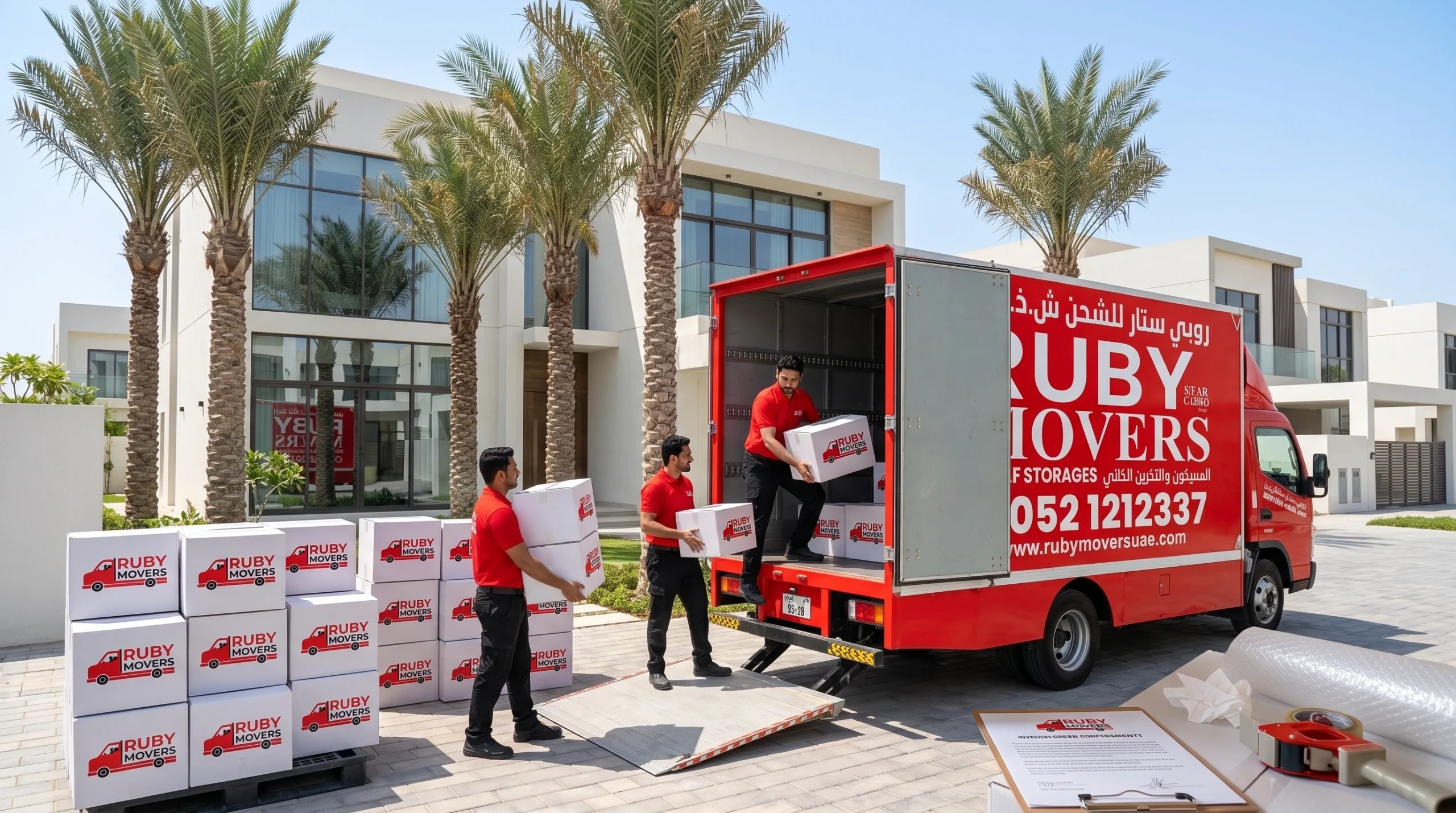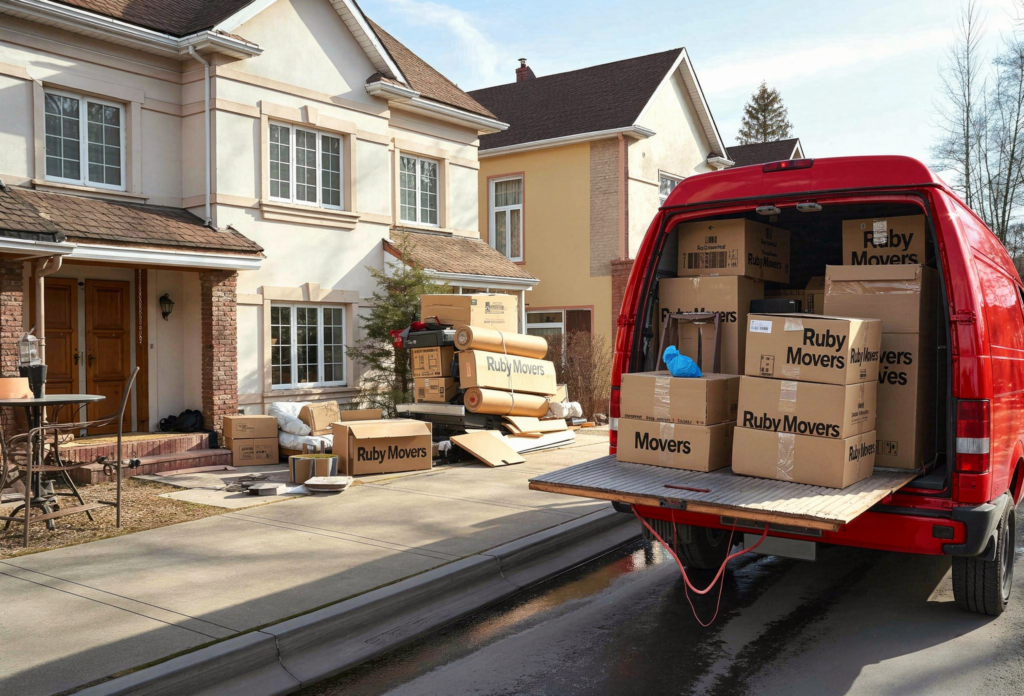
Home movers in Downtown Dubai provide packing, furniture wrapping, fragile item protection, dismantling, loading, transport, unpacking, and room-level placement for apartments, serviced residences, penthouses, and selected villa moves. Packing service cost depends on home size, carton count, item value, material quality, elevator access, loading bay timing, building permits, and fragile inventory.
Downtown Dubai contains Dubai Mall, Burj Khalifa, luxury apartment towers, serviced residences, hotels, retail zones, visitor traffic, and managed access points. Emaar reported 111 million Dubai Mall visitors in 2024, a 6% increase over 2023, and 98.5% average occupancy across its mall assets as of 31 December 2024. These numbers explain why Downtown Dubai moves depend on access planning, not distance alone.
This guide explains what packing services include, what they cost, what changes the quote, and how you can compare home movers in Downtown Dubai before booking them.
What do home movers in Downtown Dubai include in packing services?
Home movers in Downtown Dubai usually include cartons, wrapping materials, labor, furniture protection, dismantling, loading, transport, unloading, unpacking, and packing waste removal. The exact scope depends on your written quotation.
A full packing service covers almost every household item except valuables and restricted items. A partial packing service covers fragile, bulky, or high-value items only. A self-pack move reduces labor cost, but it increases risk when cartons lack weight control, void filling, or handling labels.
A complete packing service usually includes:
- Packing cartons for clothes, books, shoes, toys, linen, kitchenware, and decor.
- Bubble wrap for glassware, crockery, mirrors, frames, lamps, and vases.
- Packing paper for plates, cups, bowls, and small kitchen items.
- Stretch film for soft furniture, drawer units, mattresses, and fabric surfaces.
- Furniture blankets for sofas, tables, cabinets, chairs, and polished wood.
- Dismantling for beds, wardrobes, dining tables, desks, shelves, and cabinets.
- Labels for room name, item type, unpacking priority, and handling instructions.
- Loading through the approved service lift, loading bay, or security gate.
Downtown Dubai packing takes more coordination because many buildings control service lift bookings, crew identity checks, truck entry, and loading bay use. A mover packs your home inside a controlled building schedule.
How much do packing services cost in Downtown Dubai?
Packing services in Downtown Dubai commonly sit inside the full moving quote, not as a separate line item. Published Dubai moving cost guides place studio moves around AED 700 to AED 1,200; one-bedroom moves around AED 900 to AED 2,000; two-bedroom moves around AED 1,800 to AED 3,500; and larger homes or villas from AED 3,500 upward, based on home size and service scope.
The table below defines practical cost bands for Downtown Dubai packing services. These figures combine published Dubai mover ranges with common packing variables, such as cartons, labor, materials, dismantling, and fragile item handling.
| Home type in Downtown Dubai | Typical packing and moving range | Packing complexity | Common cost drivers |
| Studio apartment | AED 700 to AED 1,200 | Low to medium | Cartons, clothes, kitchen items, lift timing |
| 1-bedroom apartment | AED 900 to AED 2,000 | Medium | Furniture wrapping, kitchen packing, television packing |
| 2-bedroom apartment | AED 1,800 to AED 3,500 | Medium to high | More cartons, beds, cabinets, fragile decor |
| 3-bedroom apartment | AED 3,000 to AED 5,000 | High | Multiple rooms, larger furniture, more labor |
| Villa or townhouse move connected to Downtown Dubai | AED 3,500 and above | High | Outdoor items, bulky furniture, more trucks |
These cost bands are useful for screening quotes. Your final price changes after a survey because movers calculate labor hours, cartons, truck size, fragile inventory, dismantling time, and access limitations.
Why do Downtown Dubai packing costs change?
Downtown Dubai packing costs change because vertical access, fragile inventory, building rules, and item volume affect labor time. A short-distance move can still cost more than a longer move if the tower has tight service lift slots or limited loading access.
Bayut’s 2025 Dubai rental report places Downtown Dubai among luxury apartment areas, with average yearly rents of AED 142,000 for 1-bedroom apartments, AED 242,000 for 2-bedroom apartments, and AED 395,000 for 3-bedroom apartments. Higher-value residences often contain heavier furniture, fitted wardrobes, marble tops, designer lights, larger televisions, and more fragile decor.
There are 8 common cost variables:
- Home size and total carton count.
- Fragile item count, including glass, artwork, mirrors, and lamps.
- Furniture dismantling and reassembly time.
- Elevator booking duration and building access rules.
- Distance from apartment door to service lift.
- Truck access from loading bay to tower entrance.
- Packing material grade and quantity.
- Unpacking, debris removal, handyman work, and same-day scheduling.
The strongest cost signal is not the apartment label. A 1-bedroom home with 45 cartons, a 75-inch television, a marble dining table, and artwork costs more than a minimal 2-bedroom home with fewer fragile items.
What packing materials do professional movers use?
Professional home movers use cartons, bubble wrap, packing paper, foam sheets, stretch film, corner guards, mattress covers, wardrobe boxes, furniture blankets, and tape. Each material protects a different item surface, weight class, or damage risk.
Cartons work for books, kitchenware, toys, folded clothes, and small devices. Bubble wrap protects glass, ceramic, and decor surfaces. Packing paper fills voids inside boxes and separates plates. Stretch film reduces dust and holds drawers or soft items in place. Furniture blankets protect polished wood, fabric, leather, and metal frames during lift movement.
Packing material selection affects cost because weak cartons collapse under books and overfilled kitchen boxes. A better packing plan uses smaller cartons for dense items and larger cartons for lighter items, including pillows, linens, shoes, and plastic containers.
For Downtown Dubai apartment movers, the most useful packing label is not “fragile” alone. Use room name, item type, unpacking priority, and handling note. For example, “Kitchen, glassware, high priority, upright only” gives more operational value than “fragile”.
What is included in fragile item packing?
Fragile item packing includes individual wrapping, cushioning, void filling, reinforced cartons, edge protection, upright loading, and clear labels. This service protects items that chip, crack, bend, scratch, or lose resale value after impact.
Fragile packing usually covers 10 item groups:
- Glassware, including tumblers, wine glasses, bowls, and serving dishes.
- Crockery, including plates, cups, saucers, and ceramic cookware.
- Mirrors, including wall mirrors, dressing mirrors, and decorative panels.
- Artwork, including framed prints, canvas pieces, and photo frames.
- Lighting, including table lamps, floor lamps, pendant lights, and chandeliers.
- Stone tops, including marble, granite, quartz, and ceramic tabletops.
- Electronics, including televisions, monitors, speakers, and gaming devices.
- Decor, including vases, sculptures, clocks, and display pieces.
- Glass furniture, including coffee tables, shelves, and cabinet panels.
- Personal display items, including awards, collectibles, and sentimental pieces.
Plates move better vertically inside reinforced cartons. Lamps require shade separation. Mirrors require corner guards and face protection. Televisions require screen-side pressure control and upright loading.
Ask for a fragile inventory before packing starts. The inventory creates item-level accountability and gives the crew a handling map.
Do home movers in Downtown Dubai pack furniture?
Home movers in Downtown Dubai pack furniture by wrapping surfaces, protecting corners, removing loose parts, dismantling selected items, and securing hardware. Furniture packing reduces scratches, dents, stains, loose screws, and chipped edges.
Furniture packing usually covers sofas, beds, dining tables, chairs, wardrobes, consoles, coffee tables, shoe cabinets, desks, shelving units, and outdoor furniture. Large furniture creates special risk in Downtown Dubai towers because lift dimensions, corridor turns, and service doors limit movement.
A practical furniture packing sequence includes 7 steps:
- Photograph each item before dismantling.
- Remove glass panels, shelves, drawers, loose cushions, and knobs.
- Pack screws, bolts, and fittings in labeled zipper bags.
- Wrap polished surfaces with padding or blankets.
- Protect corners with cardboard or foam guards.
- Label each panel by room and furniture name.
- Recheck hardware bags before loading.
The process supports faster reassembly. It also creates evidence if a damage claim becomes necessary.
For movers, the lesson is simpler: Glass-heavy environments demand edge control, route control, and surface protection.
Do movers unpack after delivery?
Movers usually provide basic unpacking when the quote includes full packing and unpacking. Basic unpacking means opening cartons, placing items on flat surfaces, assembling furniture, and removing used packing material.
Detailed unpacking costs more. Detailed unpacking includes arranging kitchen cabinets, wardrobe sections, bookshelves, children’s rooms, storage areas, decor placement, and item sorting. Ask for this line separately because it takes more labor after delivery.
Unpacking becomes more important in Downtown Dubai when building move timings restrict hallway use. Cartons cannot sit for long periods near lift lobbies, fire exits, parking areas, or shared corridors. Your move runs cleaner when the mover places cartons directly inside the correct room.
Use a priority system. Mark essential cartons as “Day 1.” These cartons include chargers, toiletries, bedding, uniforms, work laptops, children’s school items, coffee supplies, medicines, and basic kitchenware.
What building approvals affect packing and moving?
Building approvals affect packing and moving through move permits, elevator booking, loading bay timing, security access, and tenant documentation. Downtown Dubai towers often require approval before any moving crew enters the service area.
Emaar communities are known for move-in and move-out permit procedures, while Dubai Land Department (DLD) provides digital tenancy services through the Ejari system and Dubai REST app. DLD also lists Dubai REST, the Land Department website, and trustee centers as channels for tenancy contract cancellation when a rented property has been vacated.
A building approval pack commonly includes:
- Tenancy contract or ownership proof.
- Emirates ID or passport copy.
- Move-in or move-out date.
- Moving company trade license.
- Vehicle details and driver details.
- Crew names and identification copies.
- Service lift booking request.
- Refundable damage deposit, if the building requires one.
Submit building documents early if the property manager sets an approval lead time. A mover can pack on time only when security allows truck entry, crew access, and service lift usage.
How do DEWA and tenancy documents connect with moving?
Dubai Electricity & Water Authority (DEWA) and tenancy documents connect with moving because utility activation, tenancy registration, and move-out evidence create the administrative side of relocation. Packing protects items, while documentation protects access, deposits, and handover claims.
DEWA describes its move-in service as electricity and water activation for new premises with digital integration through DLD. Dubai REST also supports lease management, including registration, renewal, and cancellation functions for owners, landlords, and tenants.
For a Downtown Dubai move, prepare 5 document groups:
- Building approval documents for access.
- Move-out photos for handover evidence.
- Inventory list for item tracking.
- DEWA and tenancy records for utility and lease status.
- Quotation, invoice, and terms for mover accountability.
The document pack reduces disputes. It separates building damage, old property defects, mover damage, and tenant handover issues.
How do permits and truck rules affect the price?
Permits and truck rules affect price by changing waiting time, access timing, route choice, and crew productivity. A mover charges more when the crew waits at the loading bay or loses the service lift slot.
The UAE Ministry of Interior lists a heavy vehicle passing permit service for roads where heavy trucks are not allowed except under approved conditions. Most apartment moves use smaller covered trucks, but Downtown Dubai routing still matters because access roads, podium entries, and basement height limits can restrict vehicle movement.
Ask your mover to confirm 6 dispatch details:
- Truck size and height.
- Number of trucks.
- Crew arrival time.
- Packing start time.
- Loading bay entry process.
- Waiting-time charges.
A quote without dispatch assumptions is incomplete. Access can add hours even when the new home is only 10 minutes away.
How can you compare packing quotes?
Compare packing quotes by scope, materials, labor count, carton count, insurance terms, access assumptions, and exclusions. A low quote with vague packing language can cost more after add-ons.
Use this comparison table before booking home movers in Downtown Dubai.
| Quote element | What to check | Why it affects cost |
| Packing scope | Full, partial, fragile-only, or self-pack support | Defines labor and material use |
| Carton count | Estimated boxes by room | Prevents extra-box charges |
| Fragile packing | Mirrors, glass, art, lamps, television | Controls damage risk |
| Furniture work | Dismantling, wrapping, reassembly | Adds skilled labor time |
| Unpacking | Basic placement or detailed setup | Changes crew hours after delivery |
| Building access | Lift booking, loading bay, permits | Prevents waiting-time disputes |
| Liability terms | Damage reporting window and claim documents | Supports evidence-based claims |
This table defines the quote as an operating plan, not only a price. The best quote for your move is the clearest quote, not the lowest number.
What damage control steps reduce claims?
Damage control starts before packing because evidence, inventory, and surface photos create accountability. The UAE Consumer Protection Law applies to commodities and services inside the UAE, including services provided by registered providers, advertisers, or commercial agents. The law also treats service quality and consumer safety as consumer rights.
Use 6 evidence controls before movers arrive:
- Photograph furniture, electronics, glass, artwork, walls, doors, and floors.
- Record serial numbers for televisions, speakers, monitors, and appliances.
- Create a fragile inventory with item descriptions and room names.
- Mark old scratches before wrapping begins.
- Save the written quotation, payment proof, and terms.
- Check items before signing completion documents.
Damage claims become harder when you lack dated photos. A clear evidence pack shows whether damage existed before packing, during tower movement, during truck transport, or after delivery.
What items cost extra to pack?
Extra packing charges usually apply to items that require special materials, more time, more people, or technical handling. Examples include marble tops, chandeliers, large mirrors, aquariums, safes, pianos, gym equipment, custom wardrobes, and oversized televisions.
There are 7 high-cost item types:
- Stone and glass furniture because weight and fracture risk combine.
- Artwork because frames, canvas, and glass require separate protection.
- Chandeliers because removal, parts control, and crate packing take time.
- Large televisions because screen pressure creates damage risk.
- Wardrobes because dismantling and reassembly require hardware control.
- Appliances because water lines, hoses, and fittings require preparation.
- Outdoor items because dust, rust, and irregular shapes affect wrapping.
Ask for a separate line item for each high-risk object. Separate pricing prevents arguments on moving day.
What can you pack yourself?
You can pack personal documents, jewelry, medicines, small valuables, chargers, passports, cash, and private devices yourself. Self-custody reduces privacy risk and keeps essential items available during the first night.
You can also pack low-risk items such as clothes, towels, bedding, shoes, books, toys, and pantry goods. Keep heavy items in small cartons. Keep light items in larger cartons. Do not mix liquids with electronics, paper files, or fabric.
Use this label pattern:
Room + item type + priority + handling note
Examples:
- Bedroom, bedding, Day 1, open first.
- Kitchen, plates, fragile, upright only.
- Office, documents, private, owner custody.
- Living room, decor, fragile, top load only.
The label structure helps apartment movers place boxes faster and unpack with fewer questions.
What happens to unwanted furniture and appliances?
Unwanted furniture and appliances require a disposal plan before packing starts. Dubai Municipality provides bulky waste disposal support for used household furniture, electrical appliances, and electronics, and the municipality has recorded public demand for this service in previous annual updates.
Dispose, donate, sell, or store items before moving day. Do not ask movers to decide during loading. Late decisions create delays, extra labor, and truck-space issues.
A practical pre-move sorting plan has 4 groups:
- Move to new home.
- Donate or sell.
- Dispose through approved channels.
- Store temporarily.
This simple separation reduces packing volume. Lower volume can reduce cartons, truck space, and labor hours.
How do packing services affect hidden moving costs?
Packing services affect hidden moving costs through extra cartons, extra wrapping, dismantling, waiting time, long carry distance, special handling, and unpacking. Hidden costs usually appear when the quote lacks measurable packing details.
Common hidden charges include:
- Extra cartons beyond the quoted quantity.
- More bubble wrap for fragile items.
- Long carry from apartment to service lift.
- Long carry from loading bay to truck.
- Waiting time at reception or security.
- After-hours building access.
- Extra wardrobe or bed dismantling.
- Handyman work for curtains, mounts, or appliances.
- Disposal of unwanted furniture.
- Detailed unpacking after delivery.
Ask the mover to write these cost triggers into the quote. A clear quote protects both your budget and the mover’s work plan.
What questions should you ask before hiring home movers in Downtown Dubai?
Ask questions that expose scope, evidence, and access assumptions. A proper moving quote answers packing, labor, materials, tower rules, and claim handling before payment.
Use these 12 questions:
- How many cartons does the quote include?
- Which packing materials are included?
- Does the price include fragile item packing?
- Does the crew dismantle and reassemble furniture?
- Does the quote include unpacking?
- How many movers arrive on moving day?
- What truck size does the move use?
- Who handles move permits and elevator booking?
- What happens if security delays truck entry?
- What damage evidence does the company accept?
- What items are excluded from liability?
- What payment terms apply before and after the move?
These questions protect your budget because they convert vague service language into measurable work.
Conclusion: Choose packing control before you choose the moving date
Home movers in Downtown Dubai cost less when the packing scope, access route, material grade, and damage evidence are clear before moving day. The price is not only about distance or apartment size. The real cost comes from carton volume, fragile handling, furniture dismantling, service elevator timing, loading bay access, and the level of unpacking you choose.
A good packing quote gives you more than a total price. It tells you how many cartons are included, which materials protect fragile items, who handles dismantling, how the mover labels boxes, and what happens if the building delays truck entry. That level of detail protects your budget and reduces moving-day surprises.
Downtown Dubai moves require extra attention because high-rise buildings, managed entrances, tower rules, and busy access points leave little room for guesswork. Your safest option is to treat packing as a documented process. Ask for a room-by-room estimate, approve fragile item handling in writing, photograph high-value items, and confirm the move permit before the crew arrives.
The strongest moving plan has three simple controls: clear packing scope, confirmed building access, and dated evidence. When those controls are in place, your relocation feels less like a rushed service call and more like a planned home handover.
FAQs
Can a lower packing quote become more expensive on moving day?
Yes, a low packing quote can become more expensive when it excludes extra cartons, fragile wrapping, dismantling, waiting time, or detailed unpacking.
What is the safest way to label cartons for a Downtown Dubai move?
Label each carton with room name, item type, priority level, and handling note so movers can place and unpack boxes without confusion.
Why does a 1-bedroom apartment sometimes cost more than a 2-bedroom apartment?
A 1-bedroom apartment can cost more when it has more cartons, fragile decor, marble furniture, large electronics, or difficult tower access.
Which packing items deserve separate pricing in the quote?
Mirrors, artwork, chandeliers, marble tops, oversized televisions, aquariums, safes, and custom wardrobes deserve separate pricing.
How can you reduce packing material waste after moving?
Confirm packing waste removal, reuse clean cartons for storage, and separate unwanted furniture before the packing crew arrives.
What is the first thing to confirm before booking a mover in Downtown Dubai?
Confirm the building move permit, service elevator slot, and loading bay access before confirming the packing date.
Why is a fragile inventory useful for home relocation?
A fragile inventory gives the crew a handling map and creates item-level evidence if damage occurs during packing or transport.
What should stay with you instead of the moving crew?
Passports, jewelry, cash, medicines, bank cards, private documents, chargers, laptops, and essential first-night items should stay with you.
How does unpacking level affect the final moving cost?
Basic unpacking takes less time, while detailed wardrobe, kitchen, decor, and storage setup add labor hours after delivery.
What makes a packing quote easier to compare?
A packing quote is easier to compare when it lists carton count, material types, crew size, furniture work, fragile handling, access rules, and exclusions.
Bilal Al-Madani
Bilal Al-Madani is a logistics professional specializing in residential relocations and supply chain optimization. With deep experience in the moving industry, he excels in ensuring transit safety, implementing advanced packing methods for high-value items, and managing transport fleets efficiently. He is committed to simplifying the moving process through careful planning, delivering each relocation with precision, reliability, and exceptional attention to detail.