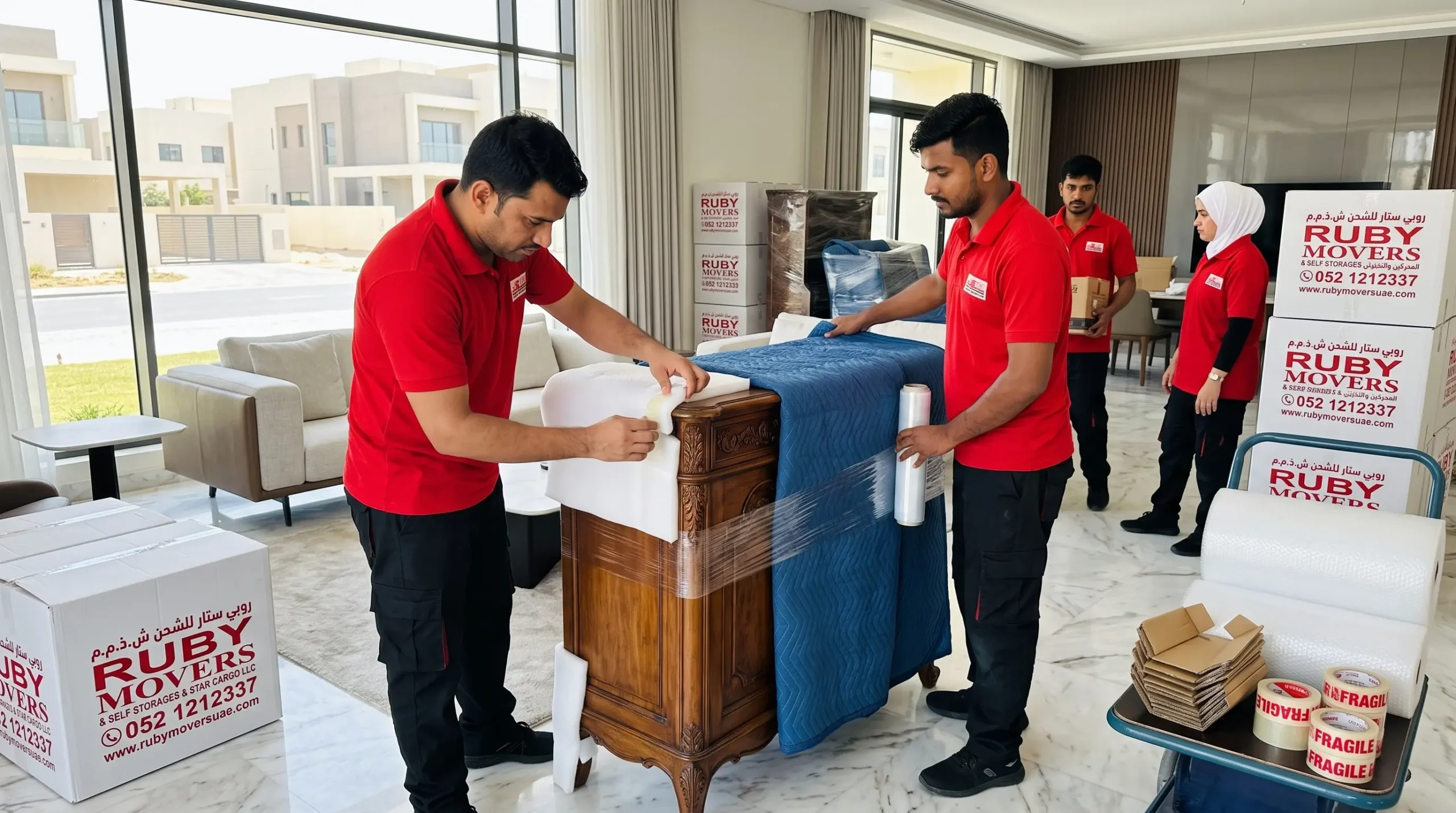
You need a move-out permit if the building, developer, or community management requires exit approval from the old unit. Many managed communities treat move-out as a separate security and handover event.
Nakheel requires residents and homeowners to apply online for move-out permits through the My Nakheel app or website. Nakheel recommends submitting the move-out request 3 to 4 working days before the move-out date because approvals typically take 1 to 2 days.
In a same-building move, security may ask for both old-unit and new-unit approvals. This happens because one desk controls 2 events. The resident leaves one unit and enters another unit, even if both units sit on the same floor.
Skipping a move-out permit can create a practical block. Security may stop the elevator booking, reject the crew list, or refuse furniture movement through the lobby.
What documents are required for house shifting in the same building or community?
The core documents are Ejari, Emirates ID, passport copy, visa page, title deed for owners, and moving company access documents. Building management may request additional documents based on property rules.
Ejari is the central tenancy record. Dubai Land Department Ejari service registers or renews a tenancy contract in Dubai, and Dubai REST lets owners and tenants manage leases through the smart real estate platform.
For move-in approval, Emaar lists Ejari, Emirates ID front and back, a passport copy, and a visa page for tenants. Homeowners may log in and apply without uploading the same tenant document bundle.
Nakheel lists different move-in documents for owners and tenants. Owners submit the title deed or sales and purchase agreement, plus the Emirates ID, passport, and visa copy. Tenants submit Ejari and identity documents.
For moving company access, Nakheel’s daily permit process lists the landlord’s or tenant’s NOC, a valid visa copy or an Emirates ID of employees, and a valid trade license of the company.
Document checklist
Use this checklist before you confirm the move date.
The strongest document pack has matching names, unit numbers, date formats, and contact details. Mismatched spelling or old tenancy information slows approval more than most residents expect.
How much does same-building or same-community shifting cost in Dubai?
The cost has 3 parts: official tenancy or utility charges, building or community charges, and private moving company charges. Official fees are verifiable. Private mover pricing depends on volume, labor, packing scope, stairs, lift access, and insurance.
Ejari registration through Dubai REST or the DLD website costs AED 177.75. Ejari registration through Real Estate Services Trustee Centers costs AED 220. These figures include the Dubai Land Department’s listed fees and partner charges.
DEWA move-in costs depend on property type. DEWA lists a security deposit of AED 2,000 for a flat and AED 4,000 for a villa. DEWA connects electricity and water within 15 working hours after the security deposit and connection fee payment.
DEWA move-out has deactivation charges. DEWA lists AED 125 for disconnecting electricity and water for small meters and AED 300 for large meters, with an AED 10 knowledge fee and an AED 10 innovation fee.
Nakheel states that move-in permits and move-out permits carry no fee or charge. This does not remove mover costs, access delays, repair liability, or building-specific refundable deposits.
Cost control table
The table below separates fixed official costs from variable moving costs.
| Cost item | Typical trigger | Official figure or status | Source type |
| Ejari online registration | New or renewed tenancy | AED 177.75 | Dubai Land Department |
| Ejari trustee center registration | New or renewed tenancy | AED 220 | Dubai Land Department |
| DEWA flat security deposit | New flat utility activation | AED 2,000 | DEWA |
| DEWA villa security deposit | New villa utility activation | AED 4,000 | DEWA |
| DEWA move-out small meter | Utility deactivation | AED 125 plus fees | DEWA |
| DEWA move-out large meter | Utility deactivation | AED 300 plus fees | DEWA |
| Nakheel move-in permit | Community move-in approval | No fee listed | Nakheel |
| Nakheel move-out permit | Community move-out approval | No fee listed | Nakheel |
| Moving company fee | Packing, labor, handling, truck, insurance | Quote-based | Commercial contract |
Private mover quotes vary because the same-building shifting can be simple or complex. A studio move with lift access has a different cost base than a 4-bedroom villa move with dismantling, crating, chandeliers, appliances, marble tables, and restricted gate timing.
Ask for a line-item quote. The quote should separate packing material, crew size, truck use, furniture dismantling, handyman work, insurance coverage, storage, and overtime.
How long does an in-building shift take in Dubai?
In-building shifting can finish in one day, but the approval timeline usually starts 1 to 4 working days before the physical move. The permit lead time matters more than the actual distance.
Emaar requires move-in permit applications at least one business day before the scheduled move. Nakheel recommends move-in and move-out permit requests 3 to 4 working days before the move date, with typical approvals in 1 to 2 days.
DEWA’s utility timing depends on the service. For activation, DEWA supplies electricity and water within 15 working hours after the security deposit and connection fees are paid. For move-out, DEWA sends the final bill within 24 working hours after the selected move-out date.
Practical timeline
Use this timeline for same-building or same-community house shifting in Dubai.
| Time before the move | Task | Why it matters |
| 7 to 10 days | Confirm tenancy, Ejari status, and landlord consent | Prevents approval blocks |
| 4 to 5 days | Request move-in and move-out permits | Covers portal review time |
| 3 to 4 days | Submit mover crew IDs and trade license | Supports gate pass approval |
| 2 days | Book the service lift and loading bay | Controls building congestion |
| 1 day | Confirm access approval with security | Prevents crew rejection |
| Move day | Photograph common areas, meter readings, and items | Creates damaging evidence |
| 1 day after | Check furniture, walls, lifts, and handover notes | Closes claim window early |
The physical move may take 3 to 8 hours for many apartments. Villas, duplexes, large appliances, tight corridors, and limited lift slots can extend the workday.
What movers protect your building, furniture, and deposit?
Mover controls are written checks that reduce damage, delay, access rejection, and claim disputes during house shifting. They matter most when multiple parties share responsibility.
Start with licensing and identity. The mover’s trade license, employee Emirates ID copies, vehicle details, and supervisor contact must match the permit application. Nakheel’s third-party permit process uses the company’s trade license and employee identity documents as access evidence.
Then control the building route. Confirm the service lift, loading bay, parking slot, corridor path, and protected surfaces. Ask building security whether blankets, corner guards, lift padding, floor runners, or plywood sheets are required.
Next, control the inventory. A short, same-building move still needs an item count, fragile labels, appliance serial numbers, and photo evidence. High-risk items include televisions, glass dining tables, marble tops, mirrors, gym equipment, pianos, chandeliers, servers, safes, and artwork.
The best mover control is a written scope. A verbal promise does not help when a wardrobe panel cracks or a lift wall gets scratched.
How do permits affect security gate access?
Permits convert your move from an informal request into a security-approved access event. Security teams use permits to verify who enters, when entry happens, and what work occurs inside the property.
Nakheel states that the physical move-in or move-out permit confirmation must be shown at the security point. The third-party moving company must show Emirates ID copies with the Nakheel security stamp for all entering employees.
This gate process affects same-community shifting more than same-building shifting. A same-community move may involve trucks moving between clusters, villa streets, parking entries, basement ramps, and loading zones. A same-building move may still involve a crew entering from outside.
The solution is simple. Send the final permit, crew list, and truck details to the mover one day before the move. Keep printed and digital copies with you on move day.
How does Ejari affect in-building shifting?
Ejari affects in-building shifting when the tenancy contract changes from one unit to another. A new unit usually means a new or updated tenancy record, even inside the same building.
The Dubai Land Department describes Ejari as the service used to register or renew tenancy contracts in Dubai. Dubai REST also lets owners and tenants manage lease registration, renewal, cancellation, and rental dispute follow-up.
Ejari also connects to utilities. DEWA’s activation service is digitally integrated with the Dubai Land Department after Ejari issuance. DEWA sends a welcome email with the new account number, security deposit details, and payment link after Ejari processing.
If you move within the same building but sign a new lease for another apartment, treat the move as a new tenancy event. Keep the old Ejari closure, new Ejari certificate, DEWA premise number, and access permit together.
How do DEWA services work during same-building shifting?
DEWA services work through activation, deactivation, or move-to transfer, depending on whether your old and new premises both sit in DEWA’s residential service category. The utility record follows the premises, not your furniture.
For new premises, DEWA activates electricity and water after Ejari issuance and payment of the security deposit and activation charges. The listed security deposit is AED 2,000 for a flat and AED 4,000 for a villa.
For move-out, DEWA requires all previous bills to be paid before the request. The final bill is sent within 24 working hours after the selected move-out date, and the security deposit is adjusted against the final bill.
DEWA’s move-to service can transfer the security deposit from the existing premises to the new premises. DEWA states that Ejari for the new premises is mandatory for the move-to service, and outstanding dues must be settled first.
For same-building shifting, take photos of meter readings where accessible. Also, save the 9-digit DEWA premise number for the new unit. DEWA states that the premise number appears on the door of each premise.
What happens if you skip permits or mover controls?
Skipping permits or mover controls can cause gate rejection, lift cancellation, move delays, damage disputes, utility delays, or handover problems. The risk increases in managed towers and gated communities.
The most immediate risk is access denial. Emaar states that access can be denied without a move-in permit in Emirates Living. Nakheel also requires physical permit confirmation at the security point for move-in and move-out.
The second risk is financial leakage. Delayed crews can charge for waiting time. Unprotected lifts and corridors can trigger repair claims. Missing handover photos can weaken your position when a wall mark or cracked tile appears after the move.
The third risk is administrative delay. Without Ejari, DEWA activation, move-to service, and move-in permit approval may not align. DEWA requires a valid Ejari number for tenants during activation and says Ejari for the new premises is mandatory for the move-to service.
A controlled same-building move protects your deposit, your schedule, and your relationship with building management.
How do you build a same-building shifting plan?
Build the plan around permits first, then utilities, then mover access, then physical handling. This sequence prevents the common mistake of treating the move as a furniture task only.
Start with the property file. Confirm whether the new unit has a valid tenancy contract, Ejari status, DEWA premise number, and owner clearance. Then confirm whether the old unit has move-out obligations, access card closure, parking card return, or facility clearance.
Next, request the move-in and move-out permits. Use the portal required by your community. For Emaar communities, the move-in permit runs through the relevant online portal or Emaar One route. For Nakheel communities, the move permit runs through My Nakheel or Nakheel Online Services.
Then control the mover. Share the building rules before the quote. Ask the mover to price the job based on lift availability, walking distance, item volume, packing level, dismantling needs, and gate timing.
Finally, create the handover evidence pack. Include photos of the old unit, new unit, corridors, lift interior, lobby path, loading bay, meters, fragile items, and completed furniture setup.
What evidence pack supports claims and handover?
A moving evidence pack is a dated set of photos, documents, approvals, and inventory records that supports handover, damage claims, and access verification. It is useful for tenants, owners, landlords, movers, and building management.
Create the evidence pack before the mover touches the first item. Photograph walls, floors, doors, lift panels, corridor corners, built-in wardrobes, kitchen counters, bathroom fixtures, balcony doors, and existing scratches.
Use timestamps. Use room labels. Use item names. A photo named “new living room wall before move” has better claim value than a random gallery image.
For expensive items, record serial numbers and close-up condition photos. This helps when you move televisions, monitors, routers, gaming systems, office equipment, kitchen appliances, and imported furniture.
Conclusion: A short move still needs a controlled plan
House shifting in the same building or community in Dubai works best when you treat it as a managed access event, not a small furniture task. The route may be short, but the approvals, security checks, lift controls, utility records, and damage risks still matter.
The safest approach is to organize the move before the first box is packed. Confirm Ejari status, check whether DEWA needs activation or transfer, apply for move-in and move-out permits, book the service lift, and share mover documents with building security. These steps reduce delays at the gate and prevent last-minute disputes with building management.
A same-building move can save time, but only when the paperwork and mover controls are clear. Keep a written scope, confirm crew identity, protect common areas, and photograph the old unit, new unit, lift, corridor, lobby, and fragile items. Those records create a practical evidence pack if damage, access, or handover issues appear later.
In-building shifting in Dubai becomes easier when you manage 3 things together: permission, timing, and accountability. Permission gets the move approved. Timing keeps the lift, crew, and security aligned. Accountability protects your furniture, deposit, and handover records. That is the difference between a quick internal move and a controlled relocation inside a managed Dubai property.
FAQs
Yes, but building management may still require a move permit, service lift booking, and security approval before furniture movement starts.
Yes, many buildings require service lift booking even for small moves because furniture can damage passenger lifts and common areas.
You can move small personal items if building rules allow it, but furniture movement usually needs prior approval and lift access.
Yes, a truck gate pass may apply when the mover uses community roads, villa access routes, basement ramps, or loading areas.
Yes, security can reject movers if crew names, Emirates ID copies, vehicle details, or move timing do not match the approval.
Yes, Ejari may still be required because the tenancy premises change, even if the landlord remains the same.
The most common delay is mismatched paperwork, such as wrong unit numbers, missing crew IDs, or unconfirmed lift bookings.
Yes, photograph the lift, corridor, lobby, doors, walls, and floors before the move to reduce common-area damage disputes.
You can request a quote early, but final booking is safer after written move-in approval and lift timing confirmation.
Ask for trade license details, crew IDs, packing scope, lift protection plan, damage liability terms, and a written itemized quote.
Bilal Al-Madani
Bilal Al-Madani is a logistics professional specializing in residential relocations and supply chain optimization. With deep experience in the moving industry, he excels in ensuring transit safety, implementing advanced packing methods for high-value items, and managing transport fleets efficiently. He is committed to simplifying the moving process through careful planning, delivering each relocation with precision, reliability, and exceptional attention to detail.