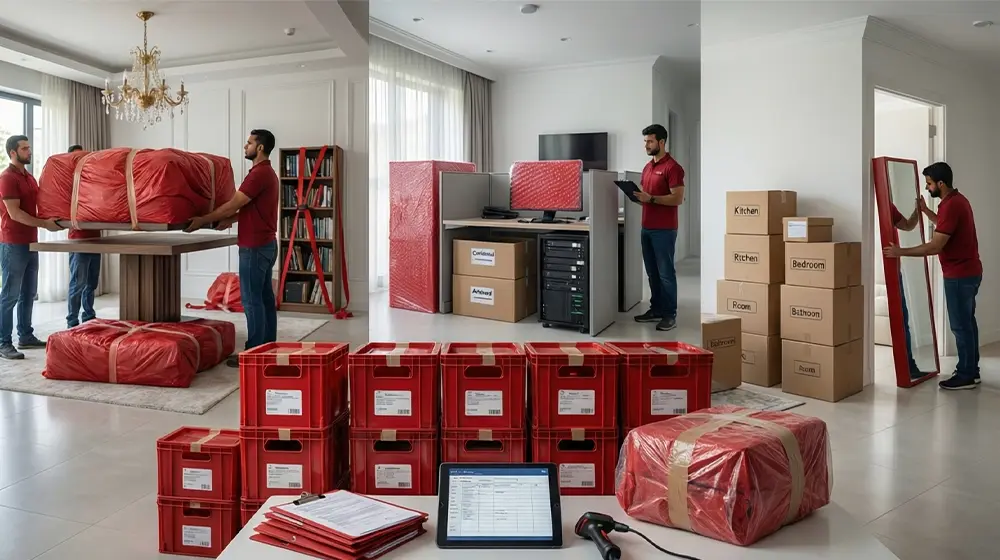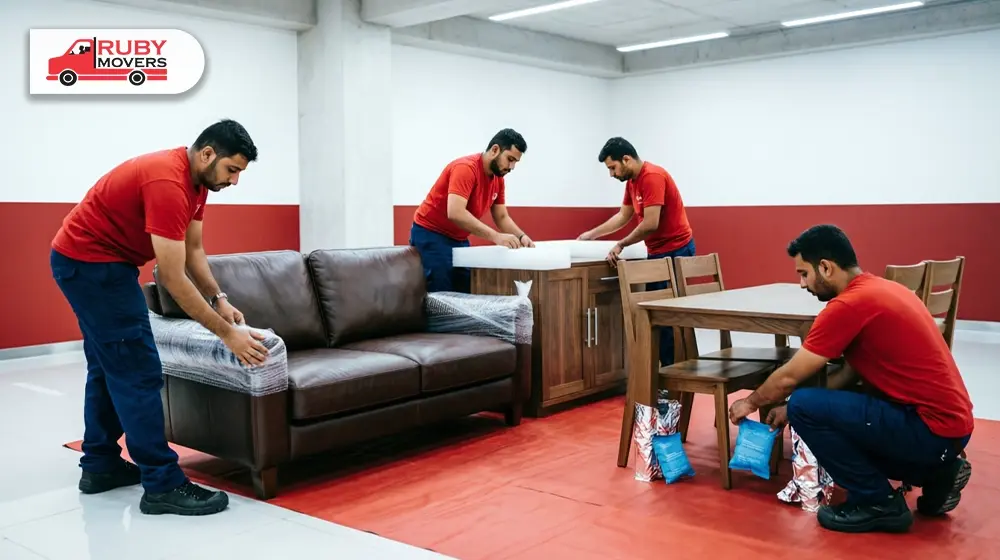
Dry air in Al Ain turns a furniture move into a material risk event. Leather loses moisture and shows dulling, stiffness, and compression lines. Wood shifts with moisture change and shows joint movement, surface checks, and finish stress. These outcomes rarely come from a single “rough moment.” They come from unmanaged exposure time, wrong contact surfaces, and missing condition evidence.
This article explains a control-based approach for furniture movers in Al Ain using 7 decision rules that protect leather and wood from low humidity, not just careful handling claims. It covers RH checkpoints and exposure logging; item classification by material and finish; three-layer packing specifications; handling geometry; time-gated workflows; claim-ready documentation; and a procurement scorecard. It also includes quantified thresholds and cited references for dispute readiness.
What benefits does this article deliver for Al Ain furniture moves?
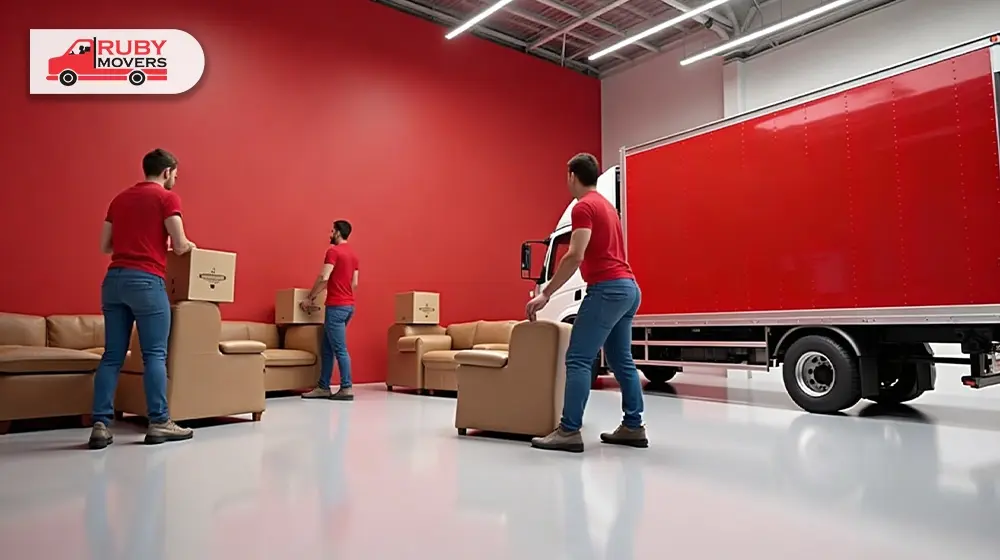
- A client gains lower damage probability for leather and wood in low-humidity moves and gains a clean evidence pack that reduces dispute time and claim friction at handover.
- Al Ain exposure profiles differ by month. Climate datasets report a low relative humidity month around May, near 20.93% in Al Ain, a level that increases drying risk for hygroscopic materials.
Decision Rule 1: What is the first decision rule for protecting leather and wood from dry air?
The first rule treats humidity exposure as a measurable variable and records RH at defined checkpoints.
Why does this rule match authority guidance?
CCI identifies below 30% RH as “very dry” for leather with embrittlement risk, so RH logging provides a defensible basis for classifying exposure windows in Al Ain months that approach or fall below that band.
What minimum checkpoint set produces a credible record?
- Origin room RH and temperature
- Staging or truck RH and temperature
- Destination room RH and temperature
- Staging duration per sensitive item group
Minimum viable humidity and exposure log
| Field | Unit | Example entry | Evidence artifact |
|---|---|---|---|
| Origin RH | % | 43 | Photo of the hygrometer display |
| Origin temperature | °C | 23 | Photo of the hygrometer display |
| Staging RH | % | 24 | Photo of the hygrometer display |
| Staging duration | minutes | 55 | Supervisor timestamp log |
| Destination RH | % | 38 | Photo of the hygrometer display |
Decision Rule 2: What material classification prevents wrong packing for leather and wood?
A team classifies each item by material system and finish sensitivity before selecting wrap, barrier films, and contact surfaces.
What classification labels reduce handling error?
Use a four-tier label system for each item in inventory and on the wrap.
- Leather type: Full grain, top grain, corrected grain, bonded
- Wood type: Solid wood, veneer, engineered panels
- Finish type: High gloss, lacquer, polyurethane, oil finish
- Hardware and joints: Knock-down fittings, dovetail joints, glued frames, metal brackets
A classification step prevents the common error where a wrap film contacts a finish or a leather panel and creates imprinting or gloss shift after transit.
Why does finish sensitivity matter in dry air moves?
Dry air increases stress in organic materials. Finish layers and adhesives respond differently from wood fibers. A plan that separates wood substrate risk from finish risk avoids wrong protection choices.
Wood preservation references describe cracking and warping outside common indoor RH bands.
Risk segmentation for Al Ain furniture moves by material and finish
| Risk Tier | Item Type | Typical Failure Mode | Primary Control |
|---|---|---|---|
| Tier 1 | Full-grain leather sofas, leather recliners | drying, stiffness, surface dulling | stable RH, breathable barrier, limited staging |
| Tier 2 | Solid wood tables, cabinets, joinery, heavy items | joint movement, surface checks | stable RH, corner protection, no over-tension wrap |
| Tier 3 | Veneer and high gloss finishes | micro scratches, imprinting, edge lifting | non-abrasive interleaf, rigid corner control |
| Tier 4 | Painted wood, laminate | scuffing, edge chip | impact control, corner guards |
Decision Rule 3: What packaging specification protects leather and wood better than generic wrap?
Packaging selection uses contact surface control as the primary rule, not wrap quantity.
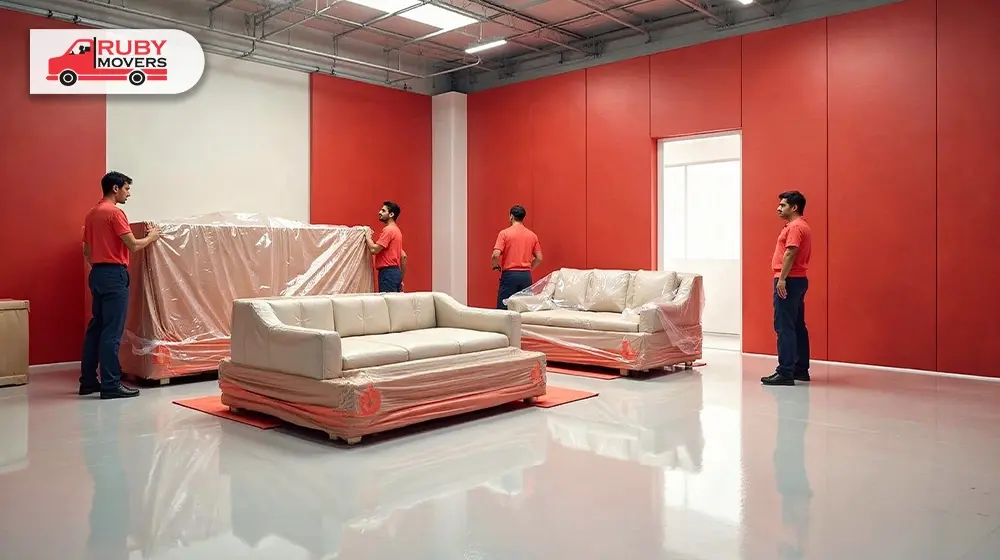
What contact surface controls reduce damage?
Use a three-layer rule where each layer has a single purpose.
- Surface layer: Non-abrasive interleaf or soft furniture blanket, no adhesive contact on finish
- Barrier layer: Film used as a moisture and dust barrier, placed over the surface layer
- Structural layer: Corner guards, edge protectors, rigid panels, or crates for high-value items
A packaging supplement for furniture shipping describes rigid framing and separation requirements for certain furniture forms, which aligns with the principle of structure plus separation rather than wrap alone.
Why does plastic film create a risk for leather and finishes?
Film under tension can trap micro abrasives, create pressure points, and transfer texture patterns. A plan that keeps film off direct finish contact reduces imprinting risk.
What moisture control options exist during staging and transit?
Logistics guidance for furniture and wood shipping references moisture control methods, such as desiccants and liners, in broader cargo contexts.
In low-humidity environments, desiccants do not solve the drying risk for leather. Drying risk correlates with low RH exposure and duration. The control focuses on time and stability.
Decision Rule 4: What handling geometry reduces scratches and joint stress during transport?
Handling geometry reduces contact events and stabilizes load orientation based on the center of mass and finish exposure.
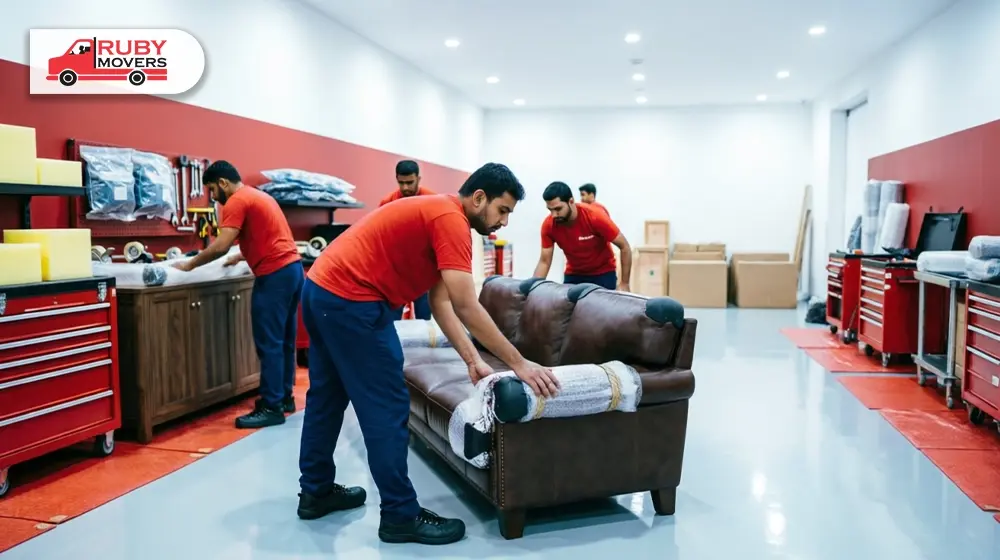
What handling controls apply to leather sofas?
Use a lift plan that protects high-wear zones.
- Protect arm caps and corners first
- Avoid face-down placement on abrasive surfaces
- Use clean blankets as the first contact layer
- Use strap contact pads between straps and upholstery
What handling controls apply to wood tables and cabinets?
Use a support plan that protects corners and joints.
- Lift from structural rails, not from decorative edges
- Keep long spans supported to reduce flex
- Use rigid corner guards to reduce impact transfer
Wood moisture references connect RH to eventual wood moisture content. A lower RH environment pushes wood toward lower moisture content, which can increase brittleness over time.
What loading controls reduce vibration and abrasion?
- Use anti-slip mats under heavy items
- Separate glossy surfaces with interleaf barriers
- Avoid stacking that increases surface contact
Decision Rule 5: What timeline control prevents dry air exposure from becoming a damage event?
A move plan treats time outside controlled rooms as a measurable risk segment and reduces staging windows.
Why does Al Ain seasonality matter for scheduling?
Al Ain has a desert climate. In Al Ain, there is virtually no rainfall during the year. This climate is considered to be BWh according to the Köppen-Geiger climate classification. The average temperature in Al Ain is 28.0 °C. About 48 mm of precipitation falls annually.
Al Ain experiences a moderate climate, and the summers are not easy to define. Al Ain climate datasets show periods of low RH in some months. A dataset reports May as a low RH month near 20.93%, which increases drying risk.
In Al Ain, the month with the most daily hours of sunshine is June, with an average of 12.11 hours of sunshine. In total, there are 375.5 hours of sunshine throughout June. Around 3937.89 hours of sunshine are counted in Al Ain throughout the year. On average, there are 328.16 hours of sunshine per month.
Timeline checkpoints that fit furniture movers in Al Ain operations
Use 4 gates that create a clean audit trail.
- Gate A: Pre-pack inspection time stamp
- Gate B: Pack complete photo log time stamp
- Gate C: Truck closed and dispatch time stamp
- Gate D: Unpack and placement sign-off time stamp
This structure reduces debate over where exposure and contact events occurred.
Exposure management model
| Segment | Typical Risk Driver | Control Objective |
|---|---|---|
| Segment | Typical Risk Driver | Control Objective |
| Origin waiting | Doors open, AC off, low RH | Shorten wait, keep item covered |
| Loading bay | Abrasive floors, sun exposure | Reduce contact, use clean blankets |
| Transit | Vibration and strap contact | Stabilize, pad strap interfaces |
| Destination staging | Delays at access points | Reduce queue time, prioritize sensitive items |
Decision Rule 6: What documentation creates claim readiness for leather and wood?
Documentation converts condition into evidence and aligns responsibility boundaries.
What documents belong in a leather and wood evidence pack?
Use a five-artifact evidence pack.
- Inventory with material classification
- Condition report with close-range photos
- Pack method record per item
- Handling event log with timestamps
- Handover sign off with the exceptions list
This evidence pack matches procurement expectations because it shows traceability, not marketing language.
What condition report fields reduce disputes?
- Item identifier
- Material and finish label
- Pre-move defects list
- Photo set with consistent angles
- Post placement condition check
There is no single relative humidity range that is ideal for all museum objects. Recent work by the Rochester Institute of Technology’s Image Permanence Institute shows that lowering the relative humidity (RH) and temperature (T) will greatly increase the life of plastics and other organic materials. Relative humidity (RH) should not fluctuate rapidly. For mixed collections, a non-fluctuating relative humidity above 25% and below 65% is recommended. Lowering the temperature greatly increases the longevity of collections. However, lower temperatures are hard on museum visitors.
Decision Rule 7: What procurement differentiates furniture movers in Al Ain beyond careful handling claims?
A procurement evaluates controls, evidence, and quality gates rather than generic service promises.
Procurement categories for furniture movers in Al Ain
- Material controls for leather and wood
- Packaging specification and separation logic
- Timeline and staging control plan
- Documentation and evidence pack quality
- Claims handling process clarity
What questions reveal capability fast?
- What RH measurement method appears in the move plan?
- What separation material touches high gloss wood finishes?
- What photo protocol exists for leather panels and seams?
- What exception logging method exists at handover?
A buyer gains better outcomes by selecting based on controls and evidence rather than purely on quote price.
What cost ranges quantify why controls matter?
Cost ranges show why small finish damage creates nontrivial downstream costs.
- Furniture repair costs are reported to average around $185, with a range of $106 to $274 in one published estimate.
- Furniture refinishing costs show a reported average of around $630 with a range of $150 to $1,550.
- Upholstery repair costs range from $150 to $800, depending on the scope of work and materials.
These ranges represent general market references, not UAE pricing. They support the procurement logic that prevention controls often dominate the total cost of ownership after a damage event.
Cost escalation map for leather and wood damage events
| Damage event | Typical downstream work type | Range signal | Dispute risk driver |
|---|---|---|---|
| Leather seam tear or panel damage | Upholstery repair | $150 to $800 | Pre-move condition ambiguity |
| High gloss scratch field | Refinishing | $150 to $1,550 | Packing method evidence is missing |
| Minor wood damage | Repair | $106 to $274 | Handover exceptions missing |
| Alignment change in wood doors | Adjustment plus inspection | Varies | Moisture and handling logs are absent |
Dispute scenarios with evidence artifacts
Scenario 1: Leather sofa arrives with dull panels and compression lines
A dispute forms when strap pads, staging time, and RH remain undocumented. CCI states that very dry conditions below 30% RH cause moisture loss and embrittlement in leather, supporting the relevance of RH logging during staging.
Evidence artifacts
- Pre-move leather panel close-ups
- Packing photos showing blanket layer and strap pads
- RH displays photos and the staging duration log
- Post placement close-ups and exceptions list
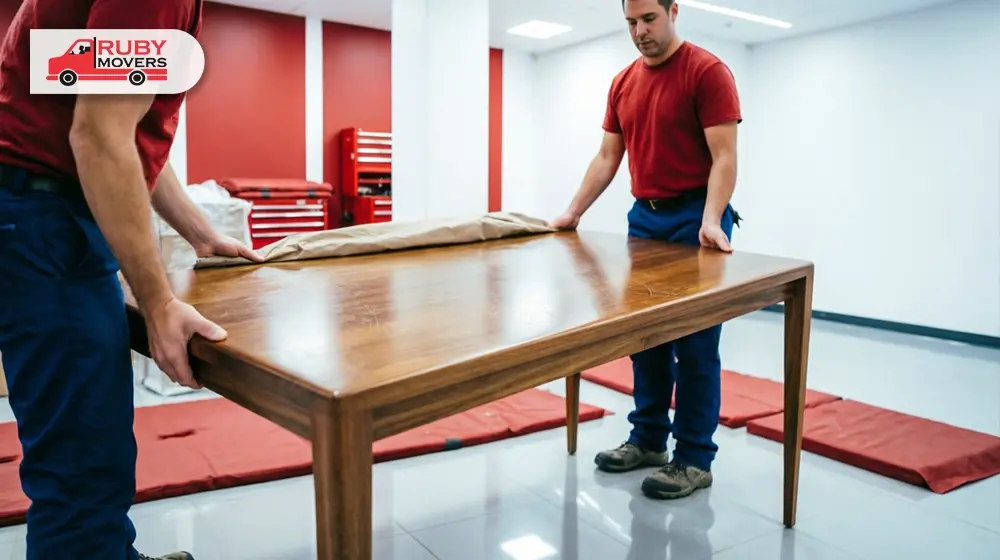
Scenario 2: High gloss wood table arrives with haze bands and micro scratches
A dispute forms when film contact and grit contamination remain unproven.
Evidence artifacts
- Photo of a clean surface layer
- Edge photo showing the interleaf between the film and the finish
- Corner protection photos
- Post placement gloss face photos under consistent lighting
Scenario 3: Solid wood cabinet door alignment changes after delivery
A dispute forms when joinery sensitivity and environmental change remain unrecorded. AWC provides a quantified approximation for wood dimensional change per moisture content change, which supports classifying tight joinery as higher risk.
Evidence artifacts
- Hinge and joinery photos pre-move
- RH and temperature readings at the origin and destination
- Placement photo showing a stable, level surface
- Exceptions note if alignment differs at Gate D
Scenario 4: Client reports damage days after delivery
A dispute forms when acceptance checks and exceptions remain undefined.
Evidence artifacts
- Gate D post placement photo set
- Signed exceptions list tied to item IDs
- Client acceptance checklist with timestamps
What does a move day checklist look like for homeowners?
A homeowner checklist focuses on observation, documentation, and sign-off clarity.
- The inventory list includes item IDs and material labels
- Pre-pack photo set completed before wrapping
- Leather and high gloss items are packed first
- Staging time recorded for Tier 1 items
- Exceptions list signed at handover with photos
What does a move day checklist look like for procurement and facilities?
A procurement checklist focuses on governance controls.
- Scope and exclusions documented
- Risk tier matrix attached to inventory
- Four timestamp gates recorded
- Evidence pack delivered as a single file set
- Exceptions workflow signed by supervisor and client representative
Final Takeaway: Dry Air Risk Requires Controls, Evidence, And Clean Handover Decisions
Dry air in Al Ain changes the economics of a furniture move. Leather and wood behave like moisture-sensitive systems, so outcomes depend less on intent and more on exposure minutes, contact surfaces, and documentation quality. The seven decision rules in this article convert vague “careful handling” language into measurable controls: RH checkpoints and staging time logs, item classification by material and finish, layered packing specifications that isolate finishes from film pressure, handling geometry that reduces contact events, time-gated audit steps, and a five-artifact evidence pack that supports claims decisions. For homeowners, the framework protects visible surfaces and reduces arguments at handover. For procurement teams, it creates traceability, predictable variance handling, and defensible vendor evaluation. The result is a move that ends with a verified condition, not assumptions.