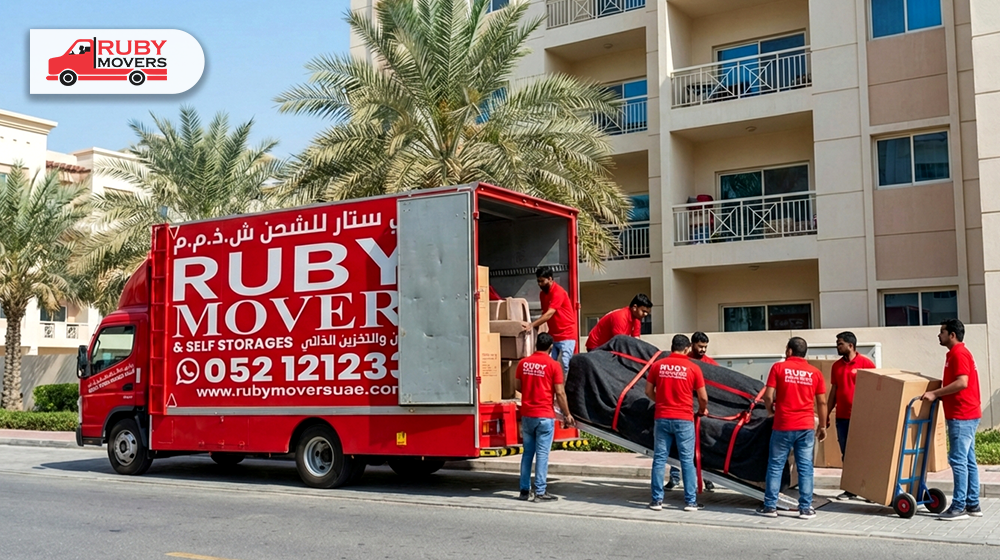
A home move in Dubai fails most often for operational reasons, not for dramatic ones. A move-in permit stays pending. The service lift stays unbooked. DEWA remains tied to the old address. The truck reaches a restricted road during a banned window. Those are local process failures, and they are predictable. Dubai had 3.655 million residents at the end of 2023, so the city’s moving volume sits inside a large, tightly managed residential system.
This guide breaks down how house shifting in Dubai works — the permits, costs, DEWA process, building rules, packing, and move-day sequence that determine whether a move goes right or wrong. You will see how house shifting in Dubai works across permits, Ejari, DEWA, truck access, building rules, timing, packing, and move-day control. You will also see how home shifting in the UAE changes when the move crosses emirates or enters a gated community.
The benefit of reading this article is practical. You reduce the risk of a same-day access block and deposit or damage disputes by documenting the move in the correct order. It must help you make better decisions before the truck arrives.
What does house shifting in Dubai actually involve?
House shifting in Dubai follows a fixed operating chain: survey, packing, loading, transport, unloading, reassembly, utility handover, and property close-out. A good mover controls the physical handling stages, like packing and transport stages. You still control permits, community timing, DEWA status, tenancy paperwork, and old-home inspection readiness.
Property type changes the logistics. A studio move usually depends on lift booking, dock access, and fast loading. A 2BHK or 3BHK adds more carton count, more dismantling, and longer room-by-room handling. A villa move adds outdoor items, wider appliance movement, longer walking distances, and gated-community security checks.
That distinction matters when you compare quotes. The same item volume can be priced differently if your tower limits loading hours, your community security stamps staff IDs, or your truck cannot enter a corridor during a restricted period. That is why home shifting UAE pricing never sits on volume alone.
The city context matters too. Dubai Land Department reported 1.38 million tenancy contracts in 2025, up 6% in volume and 17% in value from 2024, which reflects a highly active rental market. In a market this active, access systems and handover processes matter because they interact with a constant flow of move-ins and move-outs.
What does a Dubai home move usually include?
House shifting in Dubai involves 7 linked stages:
- Survey of rooms, furniture, fragile items, and access conditions
- Packing of cartons, furniture, electronics, wardrobes, and loose items
- Loading through the building lift, dock, gate, or villa frontage
- Transport across the approved route and time window
- Unloading by room and item category
- Reassembly of beds, tables, wardrobes, and major units
- Close-out through utility transfer, inspection, and key return
That list looks simple, but Dubai adds extra layers of decision. Your building manager, landlord, community portal, and DEWA timeline all affect the same moving day. That is why choosing home movers in Dubai is partly a logistics decision and partly a documentation decision.
The UAE legal & permit layer that most people ignore
Dubai home moves run through landlord approval, Ejari timing, DEWA activation, community permit approval, lift booking, and road access. If one document falls out of sequence, the truck can arrive on time and still fail to unload.
- NOC from your landlord – what it is and when you need it
A landlord NOC is the landlord’s written approval for a move, fit-out, contractor entry, or another controlled building action. You usually use it when a tower or community manager asks for owner approval before issuing access or move permission. In practice, the NOC matters most in managed buildings and gated communities where security checks resident status against tenancy records.
You get the NOC from the owner or the owner’s representative before the permit submission. Attach it to the community request if the portal or security team asks for it. If you skip it where management requires it, security can deny the truck, deny staff entry, or hold the move until the owner confirms permission.
- DEWA transfer vs new connection – the Move-To-Service process
DEWA’s Move-To-Service transfers electricity and water from one Dubai premises to another after the new Ejari issues. DEWA states that the service transfers the old account to the new address and also transfers the security deposit from the old account to the new account. That makes it the cleanest option when you move between addresses inside Dubai.
You use Move-To-Service when you already hold a DEWA account, and your next address is also inside Dubai. DEWA requires the new Ejari for the move-to process. DEWA states that electricity and water will be connected to the new premises within 15 working hours after payment of any connection fees and deposit requirements.
Use a new connection instead of Move-To-Service if there are no active account transfers from the old address. In that case, DEWA applies a tenant security deposit of AED 2,000 for apartments and AED 4,000 for villas. If you delay the request, you shift the risk to move day, appliance testing, cleaning, and old-home closure.
- Emaar, Nakheel, & DAMAC community move-in permits
Emaar Community Management states that a move-in permit is required in Emirates Living and that access is denied without it. Emaar also states that residents apply online and upload Ejari, Emirates ID, and a passport copy with the visa page. You can get the permit in one business day when the submission is complete.
Nakheel recommends that residents submit a move-in permit request 3 to 4 working days before the move because approvals usually take 1 to 2 days. Nakheel also states that there is no fee for the move-in permit, that move-in timings run Monday to Saturday from 9 am to 5 pm, and Sunday from 10 am to 1 pm. If a third-party mover is involved, Nakheel states that the mover submits a daily pass request 1 to 2 working days in advance.
DAMAC manages resident entry through DAMAC Living. The official portal includes Tenant Move In/Register and Complete work permit functions, which signal that tenant onboarding and contractor access run through the platform rather than ad hoc building requests. If you move into a DAMAC-managed property, confirm the exact tower or community window inside DAMAC Living before you lock the truck slot.
- Ejari – transfer, cancellation, and timing
Ejari is not a portable record that shifts from one apartment to another. The old record closes, and the new tenancy registers against the new premises. Ejari cancellation is important because the next tenant’s account cannot be created if the existing tenant’s final invoice remains uncancelled.
That timing affects both DEWA and your deposit workflow. Close the old record after final billing aligns, and issue the new Ejari early enough for DEWA activation and community permit submission. If you delay the Ejari sequence, the paperwork bottleneck shifts into utilities, access, and check-in timing.
RERA, tenancy rights, and deposit protection
RERA — the Real Estate Regulatory Agency — is the governing body for all residential tenancy in Dubai. RERA sets the rules on what a landlord can and cannot do during a tenancy, how much notice is required to end a contract, and what rights a tenant holds when a deposit dispute reaches the Rental Dispute Settlement Centre.
For a move-out, RERA rules matter directly. A landlord cannot legally withhold the full security deposit without a written inspection report that documents specific damage beyond normal wear and tear. Normal wear and tear — defined under Dubai tenancy law — means minor paint fading, small marks from normal use, and standard aging of fixtures. If the final inspection sheet does not separate those from actual damage, the landlord’s claim weakens at the Rental Dispute Settlement Centre.
Photograph the property before and after the move. Keep the inspection checklist signed by both parties. If the landlord raises a deduction after you have vacated, RERA-governed documentation is what resolves it — not the moving company’s report, which covers only transport damage. Understanding the framework before the move means you know what paperwork to collect at close-out, not after a dispute has already started.
- Lift booking and RTA truck access rules
Service-lift booking controls tower moves. Emaar’s move-in flow ties access to permit approval, and many managed buildings allocate the lift and loading slot only after the permit clears. That means a booked mover without a booked lift is not fully booked.
Road timing matters too. RTA states that truck movement is always prohibited on some major roads, such as Al Ittihad Street, Meydan Street, and all crossings. RTA also states that Sheikh Zayed Road and residential areas near Sharjah, such as Al Mizhar, Al Muhaisnah, and Oud Al Muteena, can face a 16-hour ban from 6:00 AM to 10:00 PM. On Sheikh Mohammed bin Zayed Road, RTA adjusted truck restrictions to 6:30 to 8:30 AM, 1:00 to 3:00 PM, and 5:30 to 8:00 PM.
Home shifting costs in Dubai

The table below gives the pricing structure.
| Cost item | Typical cost range (AED) | What it affects |
| DEWA tenant security deposit, apartment | AED 2,000 | New move-in budget |
| DEWA tenant security deposit, villa | AED 4,000 | New move-in budget |
| DEWA move-out, small meters | AED 125 + fees | Old-address closure |
| DEWA move-out, large meters | AED 300 + fees | Old-address closure |
| Nakheel move-in permit | AED 0 | Community access |
| Nakheel permit lead time | 3 to 4 working days | Scheduling |
| Nakheel permit approval | 1 to 2 days | Scheduling |
| Emaar move-in permit lead time | 1 business day | Scheduling |
| Property size | What’s usually included | |
| Studio / 1BHK | 2 movers, 1 truck, basic packing materials, 4 to 5 hours | |
| 2BHK | 3 movers, 1 truck, packing materials, 5 to 7 hours | |
| 3BHK | 3 to 4 movers, 1 to 2 trucks, full packing, 7 to 9 hours | |
| 4 to 5BHK / Villa | 4 to 6 movers, 2 trucks, full packing and disassembly, 1 day | |
| Inter-emirate add-on | Extra fuel, permit, and crew-rest surcharge | |
The table gives you the fixed or semi-fixed costs and timing data around the move. That distinction matters because many customers compare only truck and labor prices, while the real budget also includes deposits, utility closure, permit timing, waiting time, and community access risk.
A cheaper quote loses value if it excludes dismantling, fragile-item packing, extra cartons, appliance disconnect, or post-delivery reassembly.
Moving from Dubai to Abu Dhabi or Sharjah: what changes
Cross-emirate moves follow the same packing and loading process but add a few practical differences. You do not need a separate moving permit to travel between emirates on federal highways, but your mover must hold a valid trade license in the emirate where the job originates. For Abu Dhabi destinations, some residential communities managed by Aldar Properties require a move-in permit similar to Emaar and Nakheel in Dubai — check with building management at least a week before the move. DEWA closure applies only to your Dubai address; the Abu Dhabi Distribution Company (ADDC) or Sharjah Electricity and Water Authority (SEWA) handles utilities at the new address. Transit time adds 45 to 90 minutes depending on traffic on Sheikh Zayed Road or Emirates Road (E611), so adjust your move-day schedule accordingly.
Factors that change your final moving bill
There are 6 main cost drivers in a Dubai home move:
- Property size
- Floor level and lift access
- Walking distance from the truck to the door
- Packing material volume
- Special handling for fragile or large items
- Inter-emirate distance and route timing
The most expensive hidden factor is failed access. A blocked loading bay or rejected permit not only delays the truck but also extends labor hours, keeps the crew in place, and can trigger rebooking if the building window closes. That is why permit readiness belongs inside the cost conversation, not after it.
How to deal with a moving quote – what to watch for?
Read the quote as a scope document, not as a headline price.
Check these 7 quote points:
- Crew count
- Truck count
- Packing materials included
- Dismantling included
- Reassembly included
- Waiting-time policy
- Insurance or liability wording
A lump-sum quote hides more risk than an itemized quote. If the document does not separate labor, materials, and access-related contingencies, you cannot tell whether the mover priced the real job or only the ideal version of it.
Look for direct wording on insurance, storage, and fragile items. “Packing excluded” often means labor arrives, but cartons, wrapping, and room-by-room packing sit outside the price. That wording matters more.
When to schedule your house shift in Dubai?
Schedule your move around 3 windows: building access, road access, and utility readiness. Your building decides when the lift and dock open. RTA restrictions shape the truck route and departure time. DEWA timing decides whether the new premises are livable when the crew leaves.
For apartments, booking 1 to 2 weeks ahead usually gives enough time for the survey, permit submission, and slot choice. For villas, inter-emirate jobs, or the October to December peak season in your brief, a longer lead time is safer. Nakheel’s own process already consumes 3 to 4 working days before the move, and the mover’s daily pass may require 1 to 2 more working days.
Morning moves usually perform better because they sit ahead of afternoon traffic restrictions and ahead of late-day tower congestion. The correct order is direct: secure the building slot first, then secure the truck timing around it.
How do home movers in Dubai handle every type of home move?
Home movers in Dubai, such as Ruby Movers UAE, fit into the part of the chain you can outsource: survey, scope confirmation, packing plan, crew sizing, truck allocation, move-day execution, and sign-off. That matters because your building, DEWA, and tenancy records stay outside the mover’s authority. A good mover makes those boundaries visible before booking.
Ruby Movers helps you understand the differences between property types, so your quote request reflects the actual move. That is a better trust signal.
- Apartment moves – from studio to 5BHK
Apartment logistics scale through density, not only through room count. A studio or 1BHK often depends on a single truck and a short lift slot. A 2BHK or 3BHK adds more carton count, more furniture handling, longer unloading, and longer room-by-room inventory control. A 5BHK tower move adds more room sequencing, more reassembly time, and tighter dock coordination.
- Villa moves – garden furniture, large items & access planning
Villa moves add width, distance, and outdoor inventory. The crew often handles garden seating, play equipment, storage units, large refrigerators, and more appliance lines. Community gates also matter more because the truck interacts with security before the crew reaches the front door.
- Downtown Dubai & gated communities – NOC + concierge protocol
High-rise and gated-community moves run through concierge and security. The move window, dock etiquette, staff entry, and resident verification all need to line up before loading starts. If the tower asks for a landlord NOC or permit, the move stops until that condition clears.
- The packing process – what gets packed, how, and what to prepare
Professional packing works best when the crew divides the move into clear item classes. The main classes are fragile items, electronics, daily-use items, wardrobes, kitchenware, furniture hardware, and room-based cartons. That method keeps the unloading process faster because each box already carries a functional destination.
Your preparation matters most in 4 areas:
- Separate documents such as passports, Emirates IDs, tenancy papers, and banking items
- Create a first-night box with chargers, medicine, toiletries, basic kitchen items, and one change of clothes
- Photograph existing marks on fragile or valuable items before packing begins
- Keep device accessories together in labeled bags for faster setup later
Keep that set outside the truck. That single choice reduces the first-night search problem after the crew leaves.
Electronics and fragile items need evidence as much as wrapping. Photograph existing marks before packing starts, keep accessory bags attached to each device, and record serial numbers for higher-value items. That supports faster checking at unload and stronger proof if damage or loss appears later.
That is not generic packing advice. It is a control system. It reduces first-night search time, reduces dispute risk, and speeds up the sign-off stage after unloading.
Move day – A timeline of what actually happens?
Move day works best when you treat it as a staged process.
- 08:00 – Arrival and inventory check
The crew arrives and walks through the home with you. You confirm the room count, large items, restricted items, and any existing damage. Photograph visible marks now, not after unloading. That gives you a pre-move condition record.
- 08:30 – Packing starts
The team starts with fragile items, décor, loose kitchenware, and electronics. Wardrobe cartons and mattresses often move later because they load faster near the truck departure. Each box gets a room label and a handling label.
- 10:30 – Loading begins
Heavy furniture and major units move first. Cartons follow the room sequence and weight. In a tower, the lift slot controls the pace. In a villa, truck placement and walking distance control the pace.
- Transit window – route control matters
The truck moves through the approved route and timing window. RTA restrictions can slow the path if the move enters a controlled corridor at the wrong hour. This is one reason early building slots usually perform better than later ones.
- Unloading and sign-off
The crew unloads by room, then reassembles larger items. Before final sign-off, check priority cartons, test key appliances, compare the unload against the inventory, and photograph any new marks immediately. That closes the move with evidence, not memory.
After the move – deposit, DEWA closure & inspection checklist
The old address remains active until you close it properly. DEWA’s move-out service costs AED 125 for small meters and AED 300 for large meters, plus the published knowledge and innovation fees. DEWA also states that the old premises will be deactivated within 24 working hours from the selected date and that you will receive the clearance certificate automatically after final bill settlement.
Then finish the tenancy close-out. Dubai Land Department states that failure to cancel Ejari prevents the new tenant from creating an account. Return access cards, hand over keys, check the inspection sheet, and record the final condition of walls, floors, bathrooms, kitchen surfaces, and meter readings.
Post-move checklist
- Check the inventory list
- Photograph any new damage
- Test core appliances
- Start the DEWA move-out at the old address
- Return access cards and keys
- Close Ejari correctly
- Attend the property inspection
How to choose home movers in Dubai – 5 things that matter

There are 5 checks that matter most when you choose home movers in Dubai.
- Check the license and operating identity
A valid trade license from the Department of Economy and Tourism (DET) or the relevant emirate authority is the baseline requirement. Ask for the license before you sign anything. The company name on the license must match the name on your quote and invoice — if they differ, the business is either operating under a different entity or the quote came from a broker passing work to an unlicensed crew. Good sign: license number printed on the quote header. Bad sign: “we’ll send it after you confirm.” Question to ask: “Can you send me a copy of your DET trade license today?”
- Check the survey quality
A professional mover should survey your home before quoting — either in person or via a video call where you walk room by room. A quote given over the phone based only on “how many bedrooms” is a rough estimate, not a binding price. Good sign: surveyor notes floor level, dock access, lift size, and number of heavy items. Bad sign: instant quote with no survey. Question to ask: “Will someone survey the property before you finalize the price?”
- Check the quote structure
The quote should be itemized — truck size, number of crew, packing materials, and any permit fees listed separately. A single headline number gives you nothing to verify or dispute. Good sign: line-item breakdown with permit costs shown as a separate line. Bad sign: one lump sum described as “all inclusive.” Question to ask: “Can you break down what’s included in this price?”
- Check the liability wording
Ask how damage claims are handled. A serious company carries goods-in-transit insurance and will name the insurer. Some companies offer “declared value” cover where you state the value of items before the move. Good sign: written liability clause in the contract with a claims process. Bad sign: verbal reassurance only, or “we’re careful so it won’t happen.” Question to ask: “What is your liability if something is damaged, and how do I make a claim?”
- Check review quality
Don’t count stars — read the text. Look for reviews that mention specific details: crew names, building permit handling, how a problem was resolved. Generic five-star reviews with no detail are easy to fake. Good sign: reviews that mention things that could only come from a real job (lift booking, packing quality, invoice accuracy). Bad sign: ten reviews posted in the same week, all with identical phrasing. Question to ask: search the company name plus “review” and “complaint” separately.
Final thoughts: the move goes well when the sequence goes right
Choosing home movers in Dubai is not only about finding a truck, a crew, and a price. It is about choosing a moving process that fits Dubai’s real operating conditions. Your move depends on permits, Ejari timing, DEWA transfer, service-lift booking, truck access, inventory control, and final handover. When those parts line up, the move feels controlled. When one part slips, the cost usually shows up in delays, repeat work, blocked access, or deposit disputes.
That is why the best decision is usually the most documented one. Ask for an itemized quote. Confirm what the mover includes. Lock the building window before you lock the truck route. Keep your records ready. Photograph the condition before packing starts and before sign-off ends. A well-run house shifting plan in Dubai does not rely on last-minute fixes. It works because each step supports the next one.
If you use this guide as a checklist instead of reading it once and moving on, you will make better decisions at the points that matter most. You will know what to prepare, what to question, what to confirm, and what to document. That is the practical difference between a move that only gets completed and a move that stays under control from the first permit to the final key handover.
Frequently asked questions (FAQs)
Confirm the permit sequence, service-lift slot, DEWA timing, and itemized scope before you pay any booking amount.
The most disruptive same-day issue is failed access, usually from a missing permit, a missing NOC, or an unbooked service lift.
The quote changes because floor level, dock access, walking distance, packing scope, and road restrictions change labor time and truck use.
A cheap quote becomes expensive when it excludes dismantling, fragile packing, waiting time, extra cartons, or reassembly.
Passports, Emirates IDs, tenancy papers, banking papers, chargers, medicines, and first-night essentials should stay with you.
Book the building window first, secure the permit next, and confirm the truck timing after that.
Photograph existing marks on furniture, appliances, electronics, and fragile items before packing starts.
Villa moves involve larger items, more outdoor inventory, longer carry distances, and tighter gate-access coordination.
A proper quote shows crew counts, truck count, packing materials, dismantling, reassembly, waiting-time policy, and liability wording.
Check the inventory, test key appliances, photograph any new damage, and start old-address closure steps immediately.
Licensed home movers in Dubai hold a trade license issued by the Department of Economy and Tourism (DET) in Dubai or the relevant emirate authority. The trade license shows the legal business name, activity type, and registration number. Ask for the trade license before booking. The company that invoices you should be the same legal entity that holds the license.
House shifting costs in Dubai vary by property size. A studio or 1BHK move typically ranges from AED 600 to AED 1,200. A 2BHK to 3BHK move ranges from AED 1,200 to AED 2,500. A villa or 4BHK and above can run from AED 2,500 to AED 5,000 or more. Those figures cover truck, crew, and basic packing. Floor level, dock limits, packing scope, and community permit requirements all affect the final bill. Always request an itemized quote rather than a headline price.
A studio or 1BHK move takes 4 to 5 hours for a standard floor and dock setup. A 2BHK typically takes 5 to 7 hours. A 3BHK runs 7 to 9 hours. A villa or large home takes a full day. Those are
operational estimates under normal access conditions. Tower lift restrictions, long walking distances from truck to door, heavy traffic, and permit delays all add time. The single factor that most often extends move-day hours is a service-lift slot that runs short or gets cancelled.
October through April is the most practical window for house moves in Dubai. Temperatures drop enough that loading and unloading outdoors is workable, and the school calendar creates natural breakpoints around September and January. The summer months — June through August — are possible but physically demanding for crews, which slows the move. October to December is the busiest season in Dubai’s rental market, so building lift slots and mover availability get tighter. Book 2 to 3 weeks ahead if your move falls in that window.